
 March 2, 2026
Credit cards are powerful financial tools. Used wisely, they help you build credit history, earn rewards, and manage cash flow. Used carelessly, they can lead to stress and long-term debt.
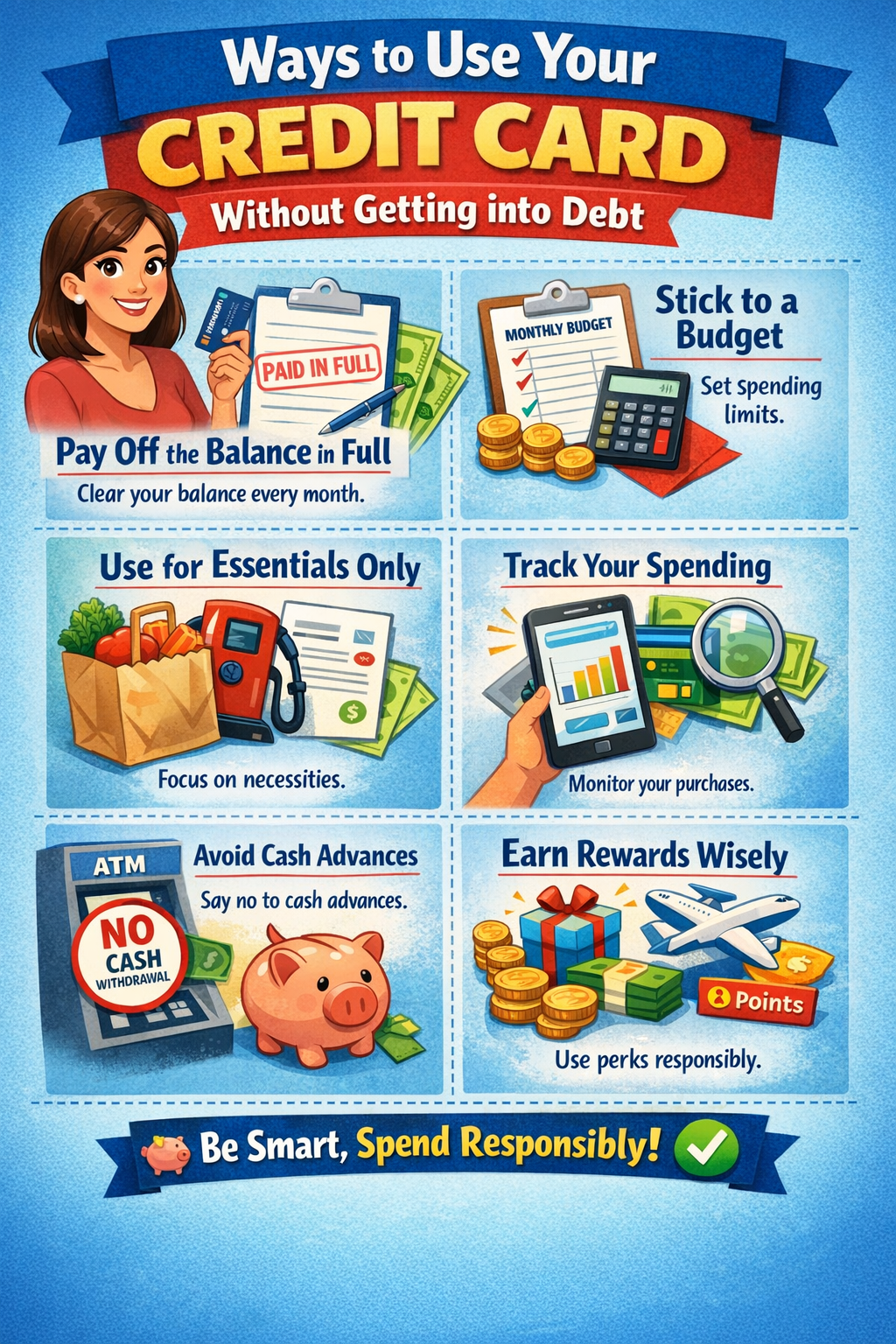
The good news? Avoiding credit card debt isn’t complicated—it’s about building consistent habits and knowing how credit cards work. Below are 10 practical, expanded strategies to help you stay in control while still enjoying the benefits of your card.
1. Treat Your Credit Card Like a Debit Card

The safest mindset when using a credit card is simple: only spend money you already have.
Many people get into trouble because they see their credit limit as extra income. But your credit limit is not money you earned—it’s borrowed money that must be paid back.
Before making a purchase, ask yourself:
- Do I already have this amount in my bank account?
- Can I pay this off in full when the statement arrives?
If the answer is no, reconsider the purchase. When you treat your credit card like a debit card, you remove the temptation to overspend.
This approach transforms your card into a payment tool, not a borrowing tool.
2. Pay Your Balance in Full Every Month

This is the most important rule of all.
Credit cards typically carry high interest rates. If you don’t pay your full statement balance, interest starts accumulating—and it compounds quickly.
By paying in full every month:
- You avoid interest charges completely
- You build a positive credit history
- You stay financially flexible
If remembering due dates is a challenge, set up:
- Automatic full payments
- Calendar reminders
- Banking app notifications
When you consistently pay in full, you’re essentially using the bank’s money temporarily—without paying extra for it.
3. Set a Personal Spending Limit (Lower Than Your Credit Limit)

Your credit limit is not your spending target.
If your limit is ₱100,000, that doesn’t mean you should spend anywhere near that amount. Financially responsible users often keep their usage below 30% of their credit limit.
Why?
- It protects your credit score
- It reduces financial pressure
- It gives you breathing room in emergencies
Create your own monthly cap based on what you can comfortably pay in full. Think of your credit limit as a safety net—not a challenge to reach.
4. Use It for Planned, Predictable Expenses

One of the smartest ways to use a credit card is for expenses you already plan for.
Examples include:
- Groceries
- Fuel
- Utility bills
- Internet
- Streaming subscriptions
These are regular expenses that fit within your monthly budget. Charging them to your credit card allows you to:
- Earn rewards or cashback
- Track spending easily
- Build payment history
The key is ensuring these expenses don’t exceed your normal monthly budget. If your spending increases just because you’re earning points, you defeat the purpose.
5. Avoid Minimum Payments

Minimum payments may seem convenient—but they are dangerous long-term.
When you pay only the minimum:
- Interest accumulates on the remaining balance
- Debt lasts much longer
- You end up paying significantly more overall
For example, a balance left unpaid can double in cost over time due to interest.
If you ever find yourself making minimum payments regularly, it’s a sign that spending needs to be adjusted immediately.
Always aim to pay the full statement balance—not just the minimum due.
6. Don’t Use Your Card for Impulse Buys

Credit cards make spending feel effortless. With just one click, a purchase is done.
That convenience can lead to impulse buying.
Try the 24-hour rule:
- Wait one full day before buying non-essential items.
- Reassess if you still want it—and can afford to pay in full.
Often, the emotional urge fades. This simple delay protects you from accumulating small, unnecessary purchases that add up over time.
Discipline beats regret every time.
7. Track Your Transactions Weekly
Waiting until your billing statement arrives can be risky.
Instead, check your credit card app weekly. This habit helps you:
- Stay aware of your running balance
- Catch unauthorized charges early
- Adjust spending before it spirals
Think of it like checking your health vitals. The more frequently you monitor, the less likely you are to face surprises.
Small corrections today prevent big problems later.
8. Use Installment Plans Carefully
Installment plans can be helpful—especially for larger purchases like appliances or gadgets.
However, “0% interest” doesn’t mean “no financial impact.”
Before committing:
- Ensure the monthly installment fits your budget
- Avoid stacking multiple installment purchases
- Understand processing fees or penalties
Installments reduce immediate financial strain—but too many at once can lock up your monthly income and create long-term pressure.
Be selective and intentional.
9. Build an Emergency Fund First
Many people rely on credit cards for emergencies because they don’t have savings.
Instead, aim to build an emergency fund covering at least 3–6 months of essential expenses.
With savings in place:
- You avoid panic borrowing
- You reduce reliance on high-interest credit
- You gain peace of mind
Your credit card should be a convenience—not your emergency plan.
Financial stability starts with preparation.
10. Choose the Right Credit Card for Your Lifestyle
Not all credit cards are the same. Some are ideal for:
- Travel rewards
- Cashback on groceries
- Dining discounts
- Fuel rebates
Choose one that matches your regular spending habits. When your rewards align with expenses you already have, you benefit without increasing spending.
Also, avoid applying for multiple cards unless necessary. More cards mean:
- More due dates
- More temptation
- More chances to overspend
Simplicity often leads to better financial control.
Final Thoughts
Using a credit card responsibly isn’t about restriction—it’s about intention.
When you:
- Spend within your means
- Pay in full
- Monitor regularly
- Plan ahead
You unlock the true benefits of credit cards without the burden of debt.
Financial discipline may not be flashy—but it’s powerful. And with the right habits, your credit card becomes a tool for growth, not a source of stress.