
 June 16, 2026
Maintaining excellent credit health is one of the smartest financial decisions you can make. A strong credit profile can open doors to better loan opportunities, lower interest rates, higher credit limits, and faster approvals for financial products. Whether you’re applying for a credit card, purchasing a home, financing a vehicle, or starting a business, your credit health plays a major role in determining your financial options.
The good news is that excellent credit isn’t reserved for a select few. It’s the result of consistent financial habits and responsible credit management over time. By following a few key practices, you can protect your credit standing and position yourself for long-term financial success.
Why Credit Health Matters
Credit health reflects how effectively you manage your financial obligations. Lenders use your credit history to evaluate the risk of lending money to you.
Excellent credit health can provide benefits such as:
- Easier access to loans and credit cards
- Lower borrowing costs
- Higher approval rates
- Better financial flexibility
- Greater negotiating power with lenders
Building and maintaining strong credit takes time, but the rewards can last for years.

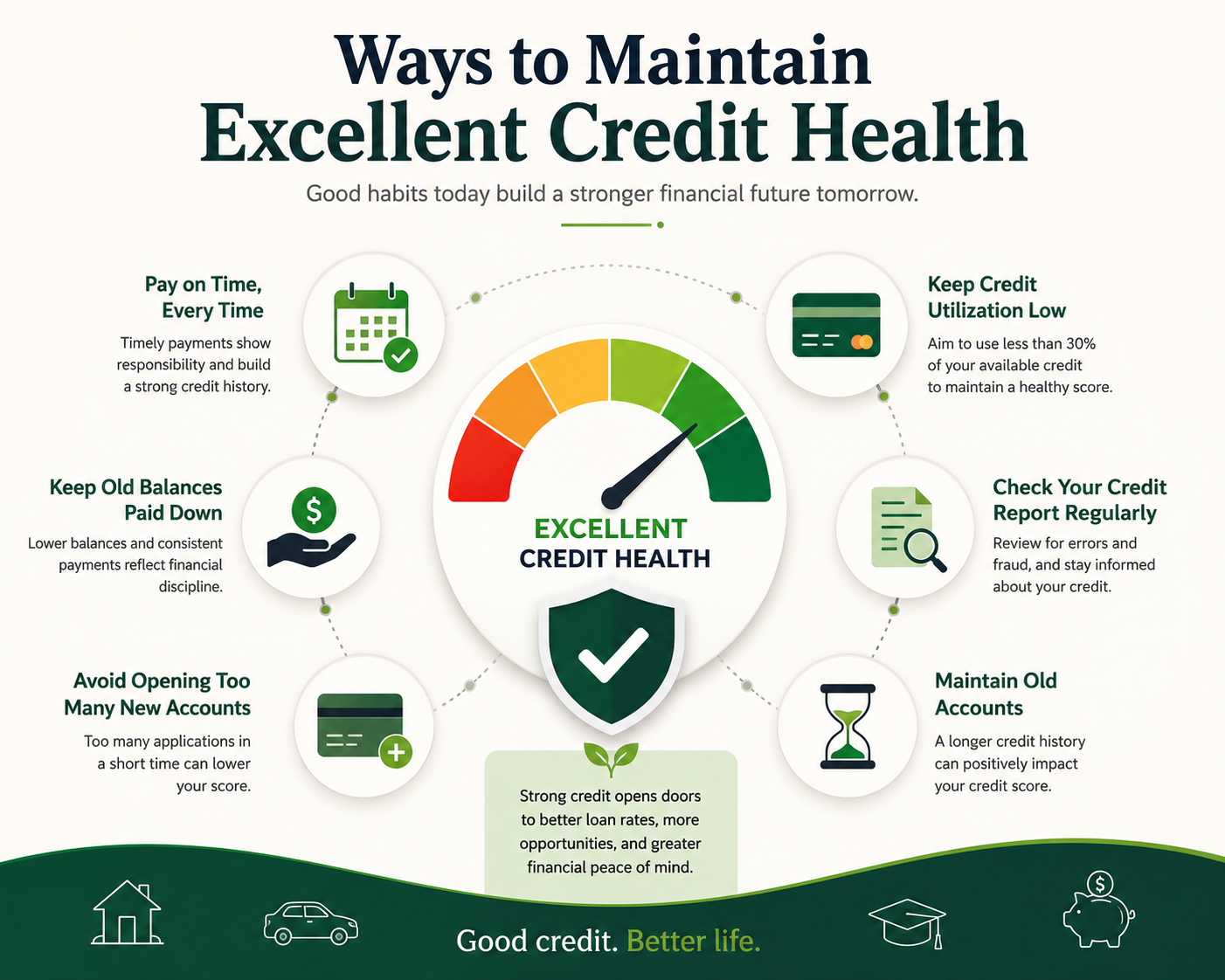
1. Pay All Bills on Time
One of the most important habits for maintaining excellent credit health is consistently paying bills by their due dates.
Payment history is often the most influential factor in credit evaluations because it demonstrates reliability and financial responsibility.
Bills that can affect your credit profile may include:
- Credit card payments
- Personal loans
- Auto loans
- Mortgage payments
- Other financial obligations
Helpful strategies include:
- Setting automatic payments
- Using calendar reminders
- Paying bills immediately after receiving income
Even a single late payment can negatively affect an otherwise strong credit profile.

2. Keep Credit Utilization Low
Credit utilization measures how much of your available credit you’re currently using.
For example:
- Credit limit: ₱100,000
- Current balance: ₱20,000
- Utilization ratio: 20%
Financial experts generally recommend keeping utilization below 30%, while utilization below 10% is often associated with excellent credit profiles.
Low utilization signals that you’re using credit responsibly rather than depending heavily on borrowed funds.
Ways to maintain low utilization include:
- Paying balances regularly
- Avoiding maxed-out cards
- Making multiple payments each month
- Requesting higher credit limits when appropriate

3. Monitor Your Credit Reports Regularly
Excellent credit health requires ongoing attention.
Reviewing your credit reports allows you to:
- Verify account information
- Detect errors or inaccuracies
- Identify unauthorized activity
- Monitor progress toward financial goals
Mistakes can occur, and identifying them early can help prevent unnecessary damage to your credit profile.
Regular monitoring also helps you understand how your financial habits influence your overall credit standing.

4. Avoid Applying for Too Much Credit
Each credit application may result in a lender review of your credit profile.
Submitting multiple applications within a short period can create concerns for lenders because it may suggest financial stress or excessive borrowing.
Instead:
- Apply only when necessary.
- Research eligibility requirements beforehand.
- Choose products that fit your financial needs.
A strategic approach to credit applications helps preserve a healthy credit profile.

5. Maintain Older Credit Accounts
The length of your credit history is another factor that contributes to your overall credit standing.
Older accounts provide lenders with a longer record of your borrowing behavior.
If an older account is in good standing, consider keeping it open whenever possible.
Benefits of maintaining older accounts include:
- Longer average credit history
- Greater account stability
- More available credit
- Stronger overall profile
Closing long-standing accounts without a clear reason may sometimes reduce these advantages.

6. Maintain a Healthy Mix of Credit
Lenders often like to see that borrowers can responsibly manage different types of credit.
Examples include:
- Credit cards
- Personal loans
- Auto financing
- Home loans
You don’t need every type of credit product, but demonstrating responsible management across various accounts may strengthen your profile over time.
The key is managing existing obligations responsibly rather than acquiring unnecessary debt.

7. Build Strong Financial Habits
Excellent credit health is often the result of broader financial discipline.
Strong habits include:
- Following a monthly budget
- Building an emergency fund
- Avoiding excessive debt
- Tracking expenses regularly
- Maintaining consistent savings
These practices reduce financial stress and help ensure that you can continue meeting your obligations on time.
Over time, strong financial habits support both credit health and overall financial wellness.

Common Threats to Excellent Credit Health
Even individuals with strong credit profiles should remain aware of common mistakes that can cause problems.
These include:
- Missing payment deadlines
- Carrying excessive balances
- Ignoring account statements
- Applying for multiple credit products simultaneously
- Closing old accounts unnecessarily
- Failing to monitor credit reports
Avoiding these pitfalls can help preserve years of positive credit-building efforts.

How Long Does It Take to Build Excellent Credit?
Excellent credit health is typically built over months and years rather than weeks.
Key factors include:
- Consistent payment history
- Responsible credit utilization
- Long-term account management
- Sound financial decision-making
The longer you maintain positive financial habits, the stronger your credit profile is likely to become.
Signs of Excellent Credit Health
You may be maintaining excellent credit health if you:
- Pay bills consistently on time
- Keep utilization rates low
- Have a long credit history
- Maintain accounts in good standing
- Qualify for favorable financial products
These indicators suggest that lenders view you as a responsible borrower.
Final Thoughts
Excellent credit health doesn’t happen by accident. It requires consistent effort, responsible financial behavior, and long-term discipline. By paying bills on time, maintaining low credit utilization, monitoring your credit reports, preserving older accounts, and practicing sound money management, you can protect and strengthen your credit profile.
The benefits extend far beyond loan approvals. Strong credit health can provide greater financial flexibility, lower borrowing costs, and more opportunities to achieve your personal and financial goals. With the right habits in place, maintaining excellent credit health becomes a valuable investment in your future.