
 July 27, 2026
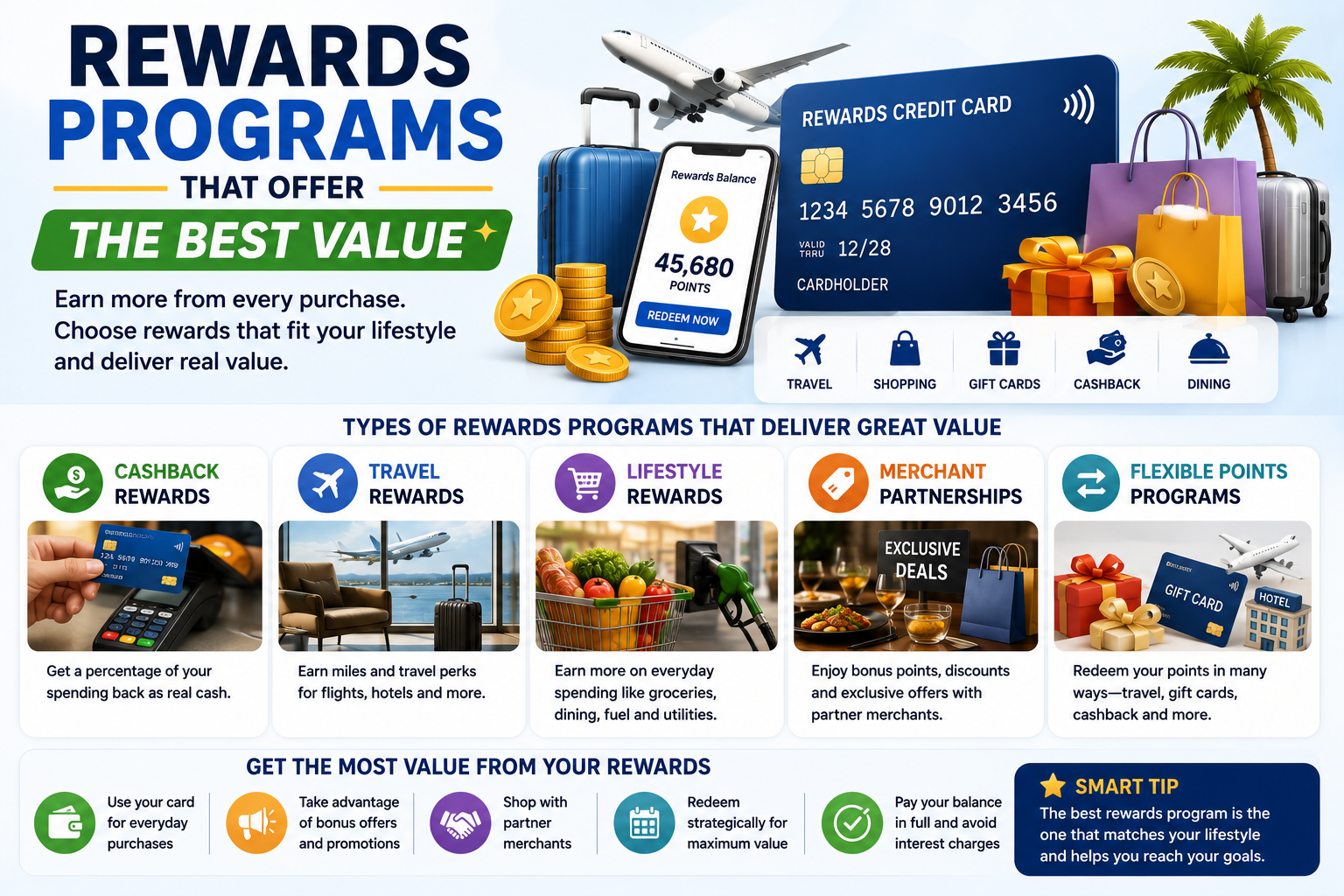
Credit card rewards programs can make your everyday spending more rewarding, but not all programs deliver the same value. Some prioritize travel perks, while others focus on cashback, shopping discounts, dining privileges, or flexible point redemptions. The best rewards program is one that aligns with your spending habits and financial goals.
Whether you’re looking to save money on daily expenses or earn free flights for your next vacation, understanding how rewards programs work can help you maximize every purchase.
This guide explores the types of credit card rewards programs that generally offer the best value and how to choose one that fits your lifestyle.
What Is a Credit Card Rewards Program?
A rewards program allows cardholders to earn points, miles, or cashback on eligible purchases.
Depending on the card issuer, rewards may be redeemed for:
- Cashback
- Travel miles
- Airline tickets
- Hotel stays
- Shopping vouchers
- Gift cards
- Merchandise
- Dining discounts
The value of a rewards program depends on how easily you can earn points and how much those points are worth when redeemed.

What Makes a Rewards Program Valuable?
Before comparing different rewards programs, it’s important to understand what determines their overall value.
Look for programs that offer:
- Competitive earning rates
- Flexible redemption options
- Low redemption thresholds
- Minimal restrictions
- No or long point expiration periods
- Valuable partner merchants
- Bonus promotions
The easiest rewards to earn aren’t always the most valuable to redeem, so it’s worth evaluating the complete program.
Rewards Programs That Often Deliver the Best Value
1. Flexible Points Programs
Flexible points programs allow you to redeem rewards in multiple ways instead of limiting you to a single category.
Common redemption options include:
- Cashback
- Travel bookings
- Gift cards
- Shopping vouchers
- Merchandise
- Bill credits
Why They’re Valuable
- Greater redemption flexibility
- Easier to match changing financial goals
- Better long-term usefulness

2. Cashback Rewards Programs
Cashback remains one of the simplest and most valuable reward structures.
Instead of tracking points, you receive a percentage of eligible purchases back.
Cashback is often available as:
- Statement credits
- Bank deposits
- Digital wallet credits
- Shopping vouchers
Best For
- Families
- Everyday shoppers
- Budget-conscious consumers
- First-time credit card users
3. Travel Rewards Programs
Travel-focused rewards are ideal for consumers who travel regularly.
Rewards may include:
- Airline miles
- Hotel stays
- Airport lounge access
- Travel insurance
- Flight upgrades
Best For
- Frequent flyers
- Business travelers
- Vacation enthusiasts
If redeemed strategically, travel rewards can sometimes provide greater value than cashback.

4. Lifestyle Rewards Programs
Lifestyle rewards focus on everyday spending categories.
These often include bonus rewards for:
- Groceries
- Dining
- Fuel
- Online shopping
- Utilities
Why They’re Valuable
Consumers naturally spend in these categories every month, making it easier to accumulate rewards consistently.
5. Merchant Partnership Programs
Some issuers work with partner merchants to offer:
- Bonus points
- Exclusive discounts
- Instant savings
- Double-point promotions
Examples may include:
- Restaurants
- Retail stores
- Supermarkets
- Hotels
- Online marketplaces
Using partner merchants can significantly increase your rewards without increasing your spending.
How to Compare Rewards Programs
Not every rewards program offers the same long-term value.
Before applying, compare these important features.
Earning Rate
Compare how quickly you earn rewards.
Examples include:
- Points per dollar spent
- Bonus categories
- Promotional multipliers
Higher earning rates generally allow you to redeem rewards faster.
Redemption Value
Some rewards provide better value than others.
For example:
- Cashback
- Travel bookings
- Gift cards
- Merchandise
Compare how many points are required for each redemption option.
Point Expiration
Some programs expire after a certain period.
Programs with longer validity periods provide greater flexibility.
Annual Fees
Premium rewards programs often include annual fees.
Ask yourself:
- Will the rewards exceed the annual fee?
- Can the fee be waived?
- Are the additional benefits worth the cost?
Redemption Flexibility
Programs with multiple redemption choices generally provide greater overall value than those with limited options.
How to Maximize Your Rewards
Once you’ve chosen the right program, use these strategies to increase its value.
Use Your Card for Everyday Spending
Charge eligible expenses such as:
- Groceries
- Fuel
- Dining
- Utilities
- Online shopping
Always stay within your budget.
Take Advantage of Promotions
Banks regularly offer:
- Double points
- Triple points
- Seasonal campaigns
- Partner merchant bonuses
Planning purchases around these promotions can accelerate your rewards.
Redeem Strategically
Avoid redeeming points immediately if better-value redemption opportunities may become available later.
Compare available options before using your rewards.
Pay Your Balance in Full
Interest charges can quickly outweigh the value of your rewards.
Paying your statement balance in full each month allows you to enjoy the benefits without unnecessary finance costs.
Common Mistakes to Avoid
Avoid these common errors when using rewards programs.
Spending More to Earn Rewards
Rewards should be a bonus—not a reason to increase spending.
Ignoring Expiration Dates
Keep track of when your points expire.
Choosing the Wrong Rewards Program
Select a program that matches your lifestyle rather than chasing the biggest advertised bonus.
Forgetting About Annual Fees
Evaluate the total value of the program, including any ongoing costs.
Which Rewards Program Is Right for You?
| Spending Style | Rewards Program That May Fit Best |
|---|---|
| Everyday household expenses | Lifestyle rewards |
| Grocery shopping | Cashback or grocery rewards |
| Frequent dining | Dining rewards |
| Daily commuting | Fuel rewards |
| Online shopping | E-commerce rewards |
| Frequent travel | Travel rewards |
| Flexible redemption | Points-based rewards |
The best rewards program is one that complements your existing spending habits rather than encouraging additional spending.
Frequently Asked Questions
Which rewards program offers the highest value?
There’s no universal answer. The highest-value program depends on how you spend and redeem your rewards. Frequent travelers may benefit most from travel rewards, while everyday shoppers often get more value from cashback or lifestyle rewards.
Are cashback programs better than points?
Cashback programs provide predictable savings, while points programs may offer greater value if redeemed strategically for travel or premium rewards.
Do reward points expire?
Some programs have expiration dates, while others keep points active as long as your account remains in good standing.
Should I pay an annual fee for a rewards card?
If the rewards and benefits you receive consistently exceed the annual fee, it may be worthwhile. Otherwise, a no-annual-fee rewards card could provide better overall value.
Final Thoughts
The best rewards program isn’t necessarily the one with the largest welcome bonus or the highest advertised earning rate—it’s the one that fits your everyday lifestyle. Whether you prefer cashback, travel perks, flexible point redemptions, or discounts with partner merchants, choosing a program that aligns with your regular spending can help you earn meaningful rewards without changing your budget.
Before applying for a rewards credit card, compare earning rates, redemption flexibility, annual fees, partner benefits, and point expiration policies. By using your card responsibly and paying your balance in full each month, you can turn routine purchases into valuable rewards that support your financial goals.