
 July 29, 2026
Credit card rewards programs can provide excellent value, allowing cardholders to redeem points for cashback, travel, shopping vouchers, gift cards, and other exclusive perks. However, many people unknowingly reduce the value of their rewards by making simple redemption mistakes.
From redeeming points too early to letting rewards expire, these common errors can cost you hundreds—or even thousands—of pesos in lost value over time. Understanding how reward programs work can help you maximize every point you earn.
In this guide, we’ll explore the most common reward redemption mistakes and share practical tips to help you get the most from your credit card rewards.
Why Reward Redemption Strategy Matters
Earning reward points is only half the equation. The real value comes from redeeming those points wisely.
A strategic redemption plan can help you:
- Get more value from each point
- Save money on future purchases
- Enjoy travel and lifestyle perks
- Avoid losing points due to expiration
- Maximize promotional opportunities
Many cardholders focus on earning rewards but overlook how redemption choices affect the overall value of their credit card.

1. Redeeming Points Too Quickly
Many people redeem their points as soon as they have enough for a small reward.
While it’s exciting to use your rewards, smaller redemptions often provide less value than larger ones.
Better Approach
Consider saving your points for higher-value redemption options, such as:
- Travel bookings
- Larger shopping vouchers
- Statement credits
- Premium merchandise
Always compare redemption values before using your points.
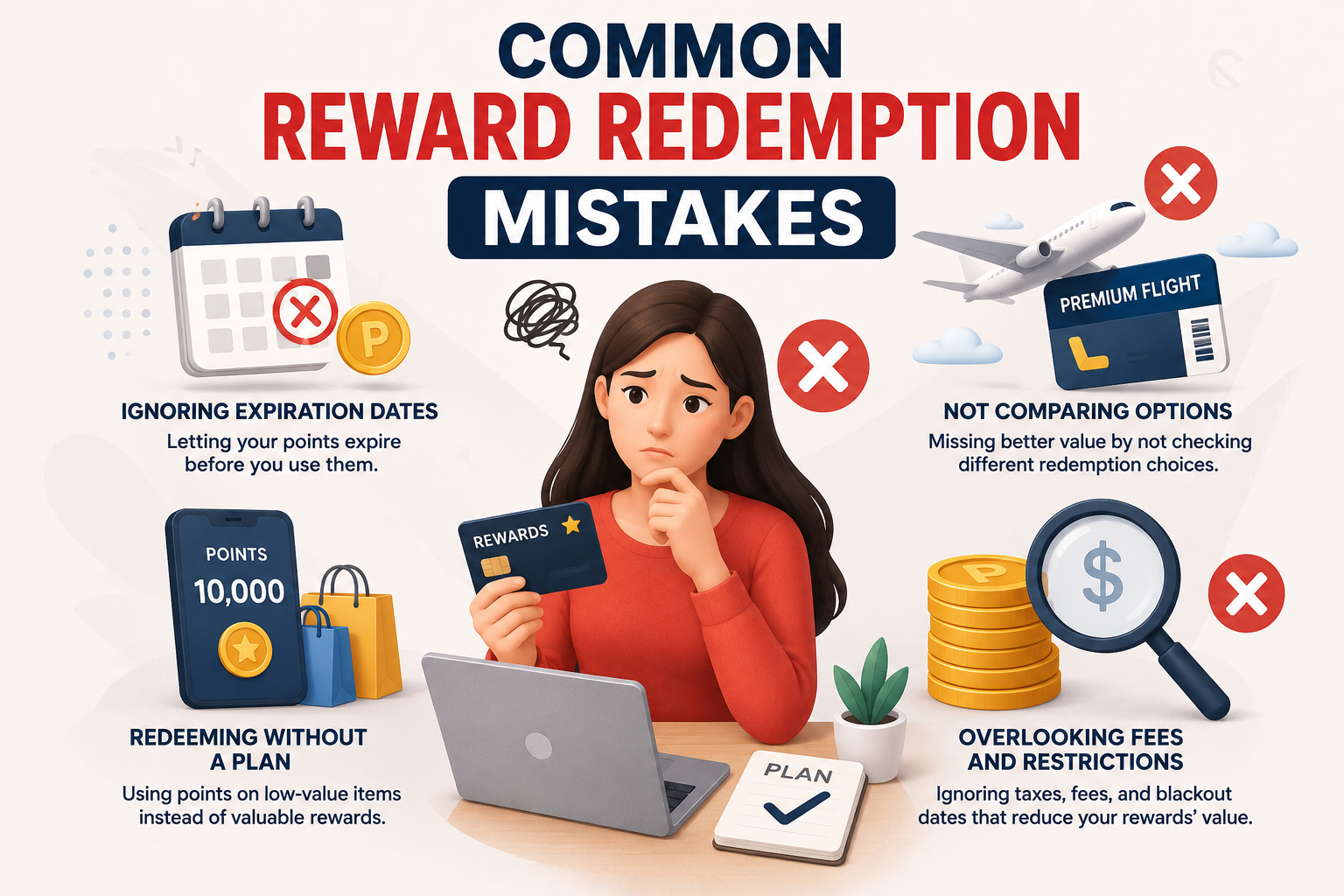
2. Letting Reward Points Expire
One of the most common mistakes is forgetting that some reward programs have expiration dates.
Expired points usually cannot be recovered.
How to Avoid It
- Check your rewards balance regularly.
- Review expiration dates.
- Set reminders before points expire.
- Redeem rewards before the deadline.
3. Ignoring Promotional Redemption Offers
Banks frequently run promotions that allow cardholders to receive:
- Bonus redemption value
- Discounted point requirements
- Extra cashback
- Special travel deals
Redeeming points outside promotional periods may mean missing out on better value.

4. Choosing Low-Value Merchandise
Some merchandise redemptions require significantly more points than other options.
For example, the same number of points might provide:
- A higher-value travel redemption
- A larger shopping voucher
- More cashback
Tip
Compare the value of different redemption categories before making your decision.
5. Spending More Just to Earn More Points
Rewards should never become the reason for making unnecessary purchases.
Buying items you don’t need simply to earn additional points often costs more than the rewards are worth.
Remember:
Responsible spending always delivers the best financial outcome.
6. Ignoring Cashback Redemption Options
Many people assume travel rewards always provide the highest value.
In reality, cashback or statement credits may be a better choice if you don’t travel often.
Choose the redemption option that best fits your lifestyle rather than following general advice.

7. Forgetting About Partner Merchants
Many rewards programs include exclusive redemption opportunities through partner merchants.
These may offer:
- Better redemption rates
- Extra discounts
- Bonus rewards
- Limited-time promotions
Always review partner offers before redeeming your points.
8. Overlooking Annual Fees
Premium rewards cards often include valuable redemption options, but they may also charge annual fees.
Ask yourself:
- Do the rewards outweigh the fee?
- Am I maximizing the card’s benefits?
- Would a lower-fee rewards card provide better value?
Evaluating the total cost helps ensure you’re getting a positive return.
9. Carrying a Balance While Chasing Rewards
Reward points lose much of their value if you’re paying high interest charges.
For example:
- Rewards earned over several months
- Interest charges from carrying a balance
If the interest exceeds the value of your rewards, you’re losing money overall.
Paying your statement balance in full each month remains the best strategy.

10. Not Reading the Program Terms
Every rewards program has different rules.
Some may include:
- Point expiration
- Minimum redemption amounts
- Eligible purchases
- Excluded transactions
- Promotional requirements
Taking a few minutes to review the terms can help you avoid costly surprises.
How to Maximize Your Reward Redemptions
Follow these best practices to get the most value from your rewards.
Redeem Based on Your Lifestyle
Choose rewards you’ll actually use.
For example:
- Cashback for everyday savings
- Travel rewards for frequent vacations
- Shopping vouchers for regular purchases
Compare Redemption Options
Before redeeming points, compare:
- Point requirements
- Estimated value
- Promotional offers
- Partner merchant discounts
Monitor Promotions
Banks regularly launch limited-time campaigns that increase redemption value.
Stay updated through:
- Banking apps
- Email notifications
- Official websites
- SMS alerts
Pay Your Balance in Full
Responsible credit card use ensures that interest charges don’t erase the value of your rewards.
Signs You’re Getting Good Value From Your Rewards
You’re likely maximizing your rewards if you:
- Redeem points before they expire
- Use promotions whenever possible
- Choose high-value redemption options
- Avoid unnecessary spending
- Pay your balance in full every month
- Regularly review your rewards program
Small improvements in your redemption strategy can lead to significant long-term savings.
Frequently Asked Questions
Is it better to redeem points immediately?
Not necessarily. Waiting for promotional redemption offers or saving for higher-value rewards may provide greater overall value.
Do reward points expire?
Some programs have expiration dates, while others keep points active as long as your account remains in good standing. Always check your card issuer’s terms.
Is cashback better than merchandise?
For many consumers, cashback or statement credits provide better value and greater flexibility than merchandise. However, the best choice depends on your financial goals and spending habits.
Can I lose my rewards?
Yes. Points may expire or be forfeited if your account is closed or no longer meets the program’s terms and conditions.
Final Thoughts
Credit card rewards can provide excellent value, but only if you redeem them strategically. Common mistakes—such as letting points expire, redeeming for low-value items, ignoring promotional offers, or carrying a balance—can significantly reduce the benefits you’ve worked hard to earn.
The best redemption strategy is one that aligns with your lifestyle and financial goals. Compare redemption options, watch for promotions, understand your rewards program’s rules, and always pay your balance in full. With thoughtful planning, your reward points can become a valuable financial tool rather than a missed opportunity.