
 April 30, 2026
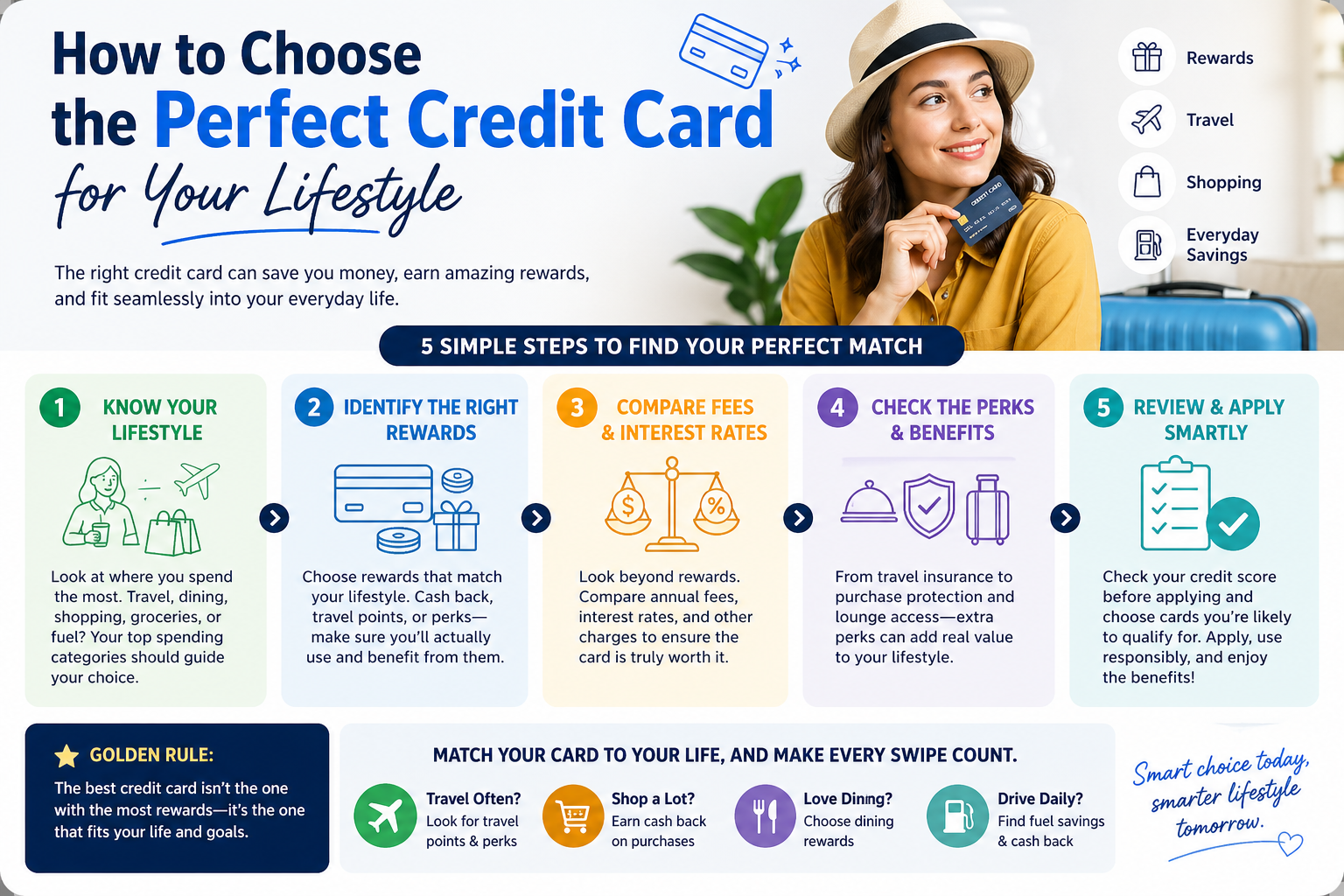
With so many credit cards available in 2026, choosing the right one can feel overwhelming. Cashback, rewards, travel perks, and low fees, every card promises something valuable. But the truth is, the best credit card isn’t the one with the most features; it’s the one that fits your lifestyle.
Whether you’re a frequent traveler, an online shopper, or someone just starting out, the key is matching your spending habits with the right card benefits.
Here’s a practical guide to choosing the perfect credit card for your lifestyle.
1. Understand Your Spending Habits

Before choosing a credit card, take a step back and look at how you actually spend your money.
Ask yourself:
- Do you spend more on dining, groceries, or shopping?
- Do you travel often?
- Do you use your card daily or occasionally?
Why it matters:
Different cards reward different types of spending. A card that works for a traveler may not be ideal for someone who mostly shops online.
Pro tip:
Review your last 2–3 months of expenses to identify patterns.
2. Decide Between Cashback, Rewards, or Travel Cards

Once you understand your spending, choose the type of rewards that fits your goals.
Main options:
- Cashback cards – Best for simple, everyday savings
- Rewards cards – Earn points for flexibility
- Travel cards – Ideal for frequent flyers
Why it matters:
Choosing the wrong reward type can limit how much value you get from your card.
Pro tip:
If you prefer simplicity, go with cashback. If you want flexibility, choose rewards points.
3. Compare Fees and Interest Rates

A credit card’s benefits can quickly be offset by high costs if you’re not careful.
What to look at:
- Annual fees
- Interest rates (APR)
- Foreign transaction fees
- Late payment charges
Why it matters:
Even a high-reward card may not be worth it if the fees outweigh the benefits.
Pro tip:
If you always pay in full, focus on rewards. If not, prioritize low interest rates.
4. Check for Lifestyle Perks and Benefits

Beyond rewards, many credit cards offer perks that enhance your lifestyle.
Examples include:
- Airport lounge access
- Dining discounts
- Shopping promos
- Travel insurance
Why it matters:
These perks can significantly increase the overall value of your card—especially if you use them often.
Pro tip:
Don’t pay for perks you won’t use. Choose benefits that match your routine.
5. Evaluate Digital Features and Security

In 2026, a credit card isn’t just physical—it’s digital.
Look for cards that offer:
- Real-time transaction alerts
- Virtual card numbers
- Mobile app controls
- Digital wallet compatibility
Why it matters:
Strong digital features make your card easier to manage and safer to use online.
Pro tip:
Choose a card with a user-friendly app—you’ll use it more than you think.
6. Consider Your Eligibility and Credit Profile

Not all cards are available to everyone.
What to check:
- Income requirements
- Credit score
- Employment status
Why it matters:
Applying for a card you don’t qualify for can lead to rejection and affect your credit profile.
Pro tip:
Start with beginner-friendly cards if you’re new to credit.
7. Think Long-Term, Not Just Short-Term

It’s easy to get excited about welcome bonuses—but your credit card should work for you in the long run.
Ask yourself:
- Will this card still benefit me next year?
- Does it grow with my lifestyle?
Why it matters:
A good credit card should support your financial goals—not just offer short-term perks.
Pro tip:
Choose a card you can keep and use for years.
Final Thoughts
Choosing the perfect credit card doesn’t have to be complicated—it just requires a bit of self-awareness and research.
To recap:
- Understand your spending habits
- Pick the right rewards type
- Compare fees and interest
- Look for relevant perks
- Check digital features
- Match your eligibility
- Think long-term
In 2026, the smartest cardholders aren’t the ones with the most credit cards—they’re the ones with the right one.
When your credit card aligns with your lifestyle, every purchase becomes more rewarding, more efficient, and more meaningful.