
 April 24, 2026
Using a credit card is convenient—but without proper tracking, it’s easy to overspend without even realizing it. A few small purchases here and there can quickly add up, leaving you surprised when your statement arrives.
The good news? Monitoring your credit card spending doesn’t have to be complicated. With the right habits and tools, you can stay in control, avoid debt, and even improve your financial health.
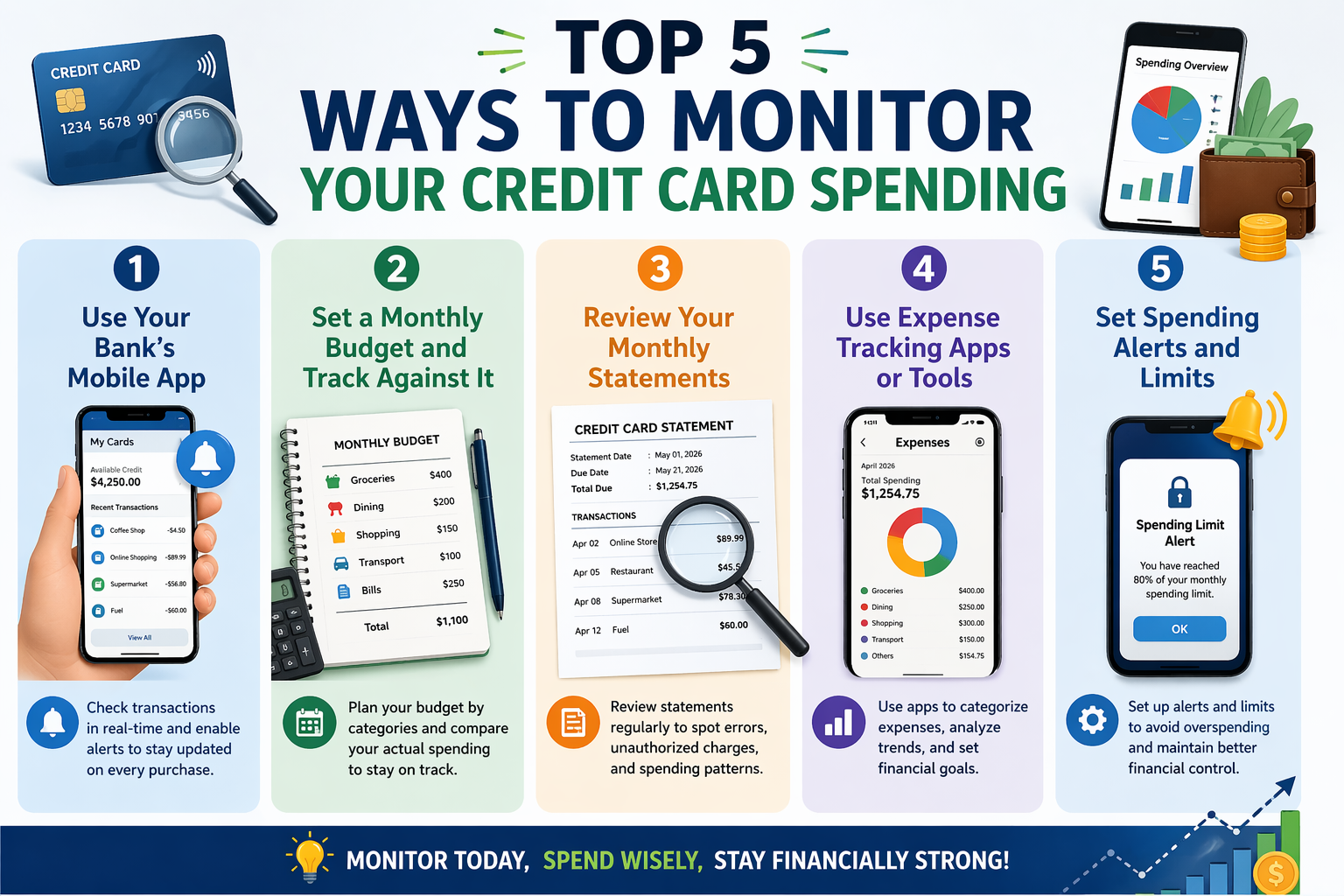
Here are the top 5 ways to monitor your credit card spending in 2026.
1. Use Your Bank’s Mobile App

Most banks now offer powerful mobile apps that give you real-time access to your transactions.
Instead of waiting for your monthly statement, you can instantly see:
- Recent purchases
- Available credit limit
- Payment due dates
Why it works:
You get immediate visibility into your spending, helping you catch unusual charges or overspending early.
Pro tip:
Turn on real-time notifications so you’re alerted every time your card is used.
2. Set a Monthly Budget and Track Against It

One of the simplest ways to stay in control is to create a monthly budget.
Break your spending into categories like:
- Groceries
- Dining & Shopping
- Bills
Then compare your actual spending against your planned budget.
Why it works:
A budget gives your money direction and helps prevent impulsive purchases.
Pro tip:
Review your spending weekly, not just at the end of the month.
3. Review Your Monthly Statements Carefully

Your credit card statement isn’t just a bill—it’s a detailed report of your financial behavior.
Take time each month to:
- Review all transactions
- Check for duplicate or unauthorized charges
- Understand where your money is going
Why it works:
Regular reviews help you spot errors, detect fraud, and identify spending patterns.
Pro tip:
Look for trends—are you spending more on dining or online shopping than expected?
4. Use Expense Tracking Apps or Tools

If you want more detailed insights, consider using expense tracking apps.
These tools can:
- Automatically categorize your spending
- Generate reports and charts
- Help you set financial goals
Why it works:
It simplifies tracking and gives you a clear picture of your habits.
Pro tip:
Choose an app that syncs with your bank or allows easy manual input.
5. Set Spending Alerts and Limits

Many banks allow you to set alerts or limits for your credit card.
You can receive notifications when:
- You reach a certain spending amount
- A large transaction occurs
- Your balance exceeds a threshold
Why it works:
Alerts act as a safety net, reminding you to stay within your limits.
Pro tip:
Set a personal spending cap below your actual credit limit to avoid overspending.
Final Thoughts
Monitoring your credit card spending isn’t about restricting yourself, it’s about staying in control.
By using the right tools and building simple habits, you can:
- Avoid overspending
- Catch errors early
- Improve your financial discipline
To recap:
- Use mobile banking apps
- Set and track a budget
- Review statements regularly
- Use tracking tools
- Enable alerts and limits
In 2026, managing your finances is easier than ever, but it still requires awareness. Stay consistent, stay informed, and your credit card will remain a helpful tool, not a financial burden.