
 June 11, 2026
Your credit score plays an important role in your financial life. Whether you’re applying for a credit card, personal loan, auto loan, housing loan, or other financial products, lenders often use your credit score to evaluate your creditworthiness.
A strong credit score can improve your chances of approval, help you qualify for higher credit limits, and even give you access to more favorable interest rates. But what exactly is considered a good credit score in the Philippines?
Understanding how credit scores work can help you make smarter financial decisions and improve your long-term financial health.
What Is a Credit Score?
A credit score is a numerical representation of your creditworthiness based on your borrowing and repayment history. It helps financial institutions assess the likelihood that you’ll repay borrowed money on time.
Your credit score is generally calculated using information such as:
- Payment history
- Outstanding debts
- Credit utilization
- Length of credit history
- Types of credit accounts
- Recent credit applications
The higher your credit score, the lower the perceived risk you present to lenders.

How Credit Scores Work in the Philippines
In the Philippines, financial institutions may obtain credit information from credit bureaus and reporting agencies that collect and maintain borrower data.
These records may include:
- Credit card accounts
- Personal loans
- Auto loans
- Housing loans
- Utility payment records
- Payment history and account status
Lenders review this information when assessing new credit card applications.
While scoring models can vary among institutions, the general principle remains the same: higher scores typically indicate lower lending risk.
What Is Considered a Good Credit Score?
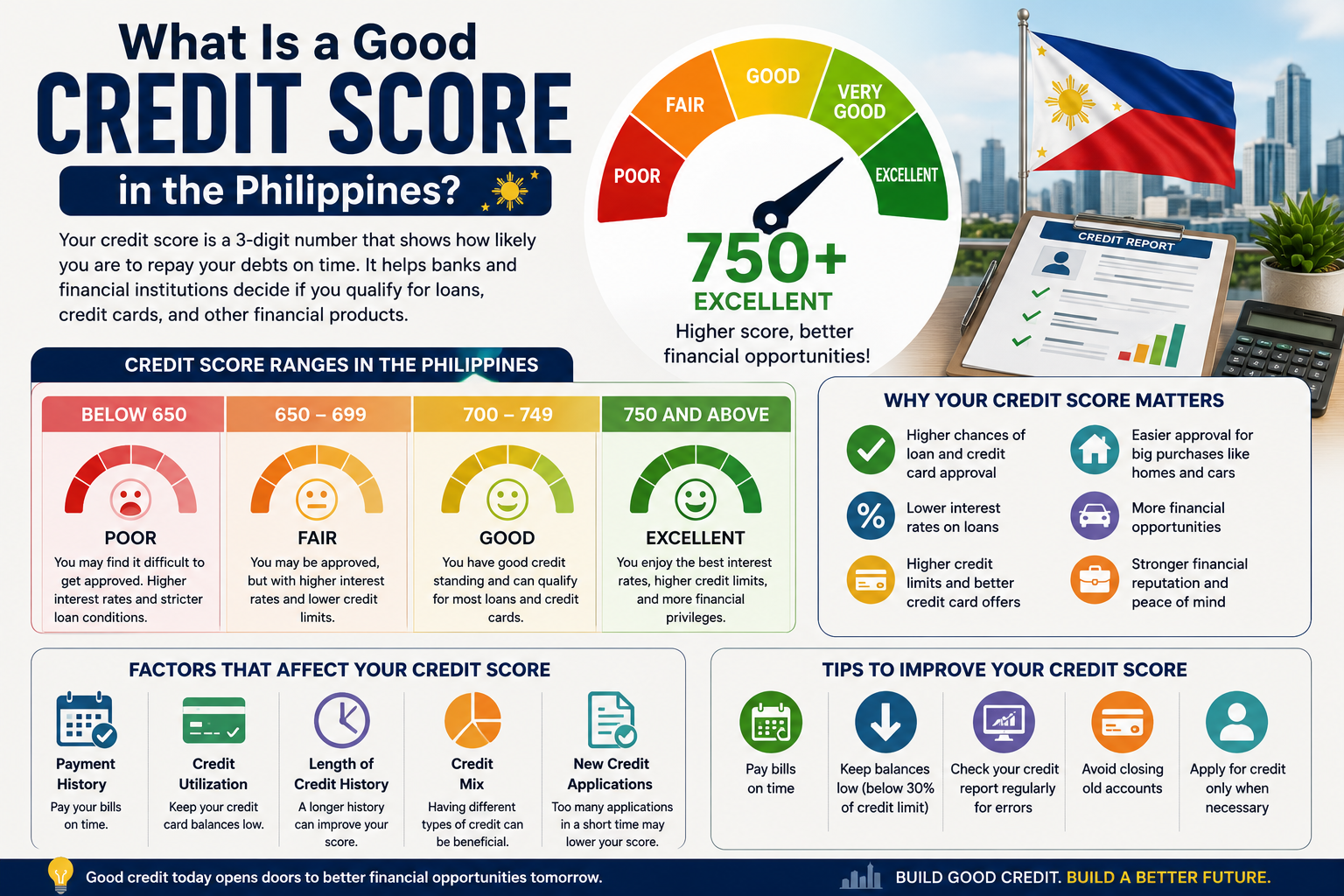
Although scoring systems may differ slightly depending on the credit bureau or lender, the following ranges provide a useful general guide.
Excellent Credit Score
750 and above
Individuals within this range are often viewed as highly reliable borrowers.
Benefits may include:
- Higher approval rates
- Better loan terms
- Lower interest rates
- Larger credit limits
- Access to premium financial products
Good Credit Score
700–749
A score in this range generally indicates responsible financial behavior.
Most lenders consider applicants with good credit to be low-risk borrowers.
You may qualify for:
- Most credit cards
- Personal loans
- Vehicle financing
- Housing loans
Fair Credit Score
650–699
A fair score suggests some positive credit history but may include areas for improvement.
Approval is still possible, although:
- Interest rates may be higher
- Credit limits may be lower
- Additional requirements may be requested
Poor Credit Score
Below 650
Scores in this range may indicate payment issues, high debt levels, or limited credit history.
Borrowers may experience:
- Reduced approval odds
- Higher borrowing costs
- More restrictive lending conditions

Why Your Credit Score Matters
Your credit score can influence many aspects of your financial life.
Loan Approvals
Banks often review credit scores before approving:
- Personal loans
- Car loans
- Housing loans
- Business loans
A higher score generally improves your chances of approval.
Credit Card Applications
Applicants with stronger credit profiles may qualify for:
- Higher credit limits
- Better rewards programs
- Premium credit cards
- Lower fees and interest rates
Interest Rates
Even small differences in interest rates can save thousands of pesos over the life of a loan.
Lenders often reserve their most competitive rates for borrowers with strong credit histories.
Future Financial Opportunities
Good credit can create access to financing options that support major life goals such as:
- Buying a home
- Starting a business
- Purchasing a vehicle
- Expanding investments
Factors That Affect Your Credit Score
Understanding the factors that influence your score can help you improve it over time.
Payment History
Paying bills on time is one of the most important contributors to a healthy credit profile.
Late or missed payments can negatively affect your score.
Credit Utilization
Credit utilization refers to the percentage of your available credit that you’re currently using.
Financial experts generally recommend keeping utilization below 30%.
Length of Credit History
Older accounts provide lenders with more information about your long-term borrowing behavior.
Credit Mix
Managing different types of credit responsibly may positively influence your profile.
Examples include:
- Credit cards
- Auto loans
- Personal loans
- Housing loans
New Credit Applications
Applying for multiple credit products within a short period may raise concerns among lenders.

How to Improve Your Credit Score
If your score isn’t where you’d like it to be, there are several ways to strengthen it.
Pay Bills on Time
Consistent, on-time payments help build lender confidence.
Reduce Outstanding Debt
Lower balances can improve both your credit utilization and overall financial profile.
Avoid Maxing Out Credit Cards
Using a large percentage of your available credit may negatively affect your score.
Monitor Your Credit Reports
Reviewing your records regularly can help identify inaccuracies or fraudulent activity.
Keep Older Accounts Open
Maintaining older accounts can strengthen the length of your credit history.
Apply for Credit Responsibly
Only apply for credit products that fit your needs and financial situation.
Common Myths About Credit Scores
Myth 1: Checking Your Credit Score Lowers It
Reviewing your own credit information generally does not negatively affect your score.
Myth 2: Carrying a Credit Card Balance Improves Credit
You can build strong credit while paying your balance in full each month.
Myth 3: Closing Old Credit Cards Improves Credit
Closing long-standing accounts may sometimes reduce the average age of your credit history.
Myth 4: Income Determines Your Credit Score
Your income alone does not determine your score. Credit scores focus primarily on borrowing and repayment behavior.
Signs You Have a Healthy Credit Profile
You may have a strong credit profile if you:
- Consistently pay bills on time
- Maintain low credit utilization
- Avoid excessive debt
- Manage multiple accounts responsibly
- Have a long history of positive credit activity
These habits contribute to long-term financial stability and stronger lender confidence.

Final Thoughts
A good credit score in the Philippines is generally considered to be 700 or higher, while scores above 750 are often viewed as excellent. Maintaining a strong credit score can improve your access to loans, credit cards, and favorable financing terms.
The foundation of a healthy credit profile is simple: pay your bills on time, keep debt manageable, use credit responsibly, and monitor your financial accounts regularly. By practicing these habits consistently, you can build and maintain a credit score that supports your financial goals and opens the door to greater opportunities in the future.