
 July 17, 2026
Choosing the right credit card isn’t always easy. With so many options available, one of the most common questions among consumers is whether a cashback credit card or a rewards credit card offers better value.
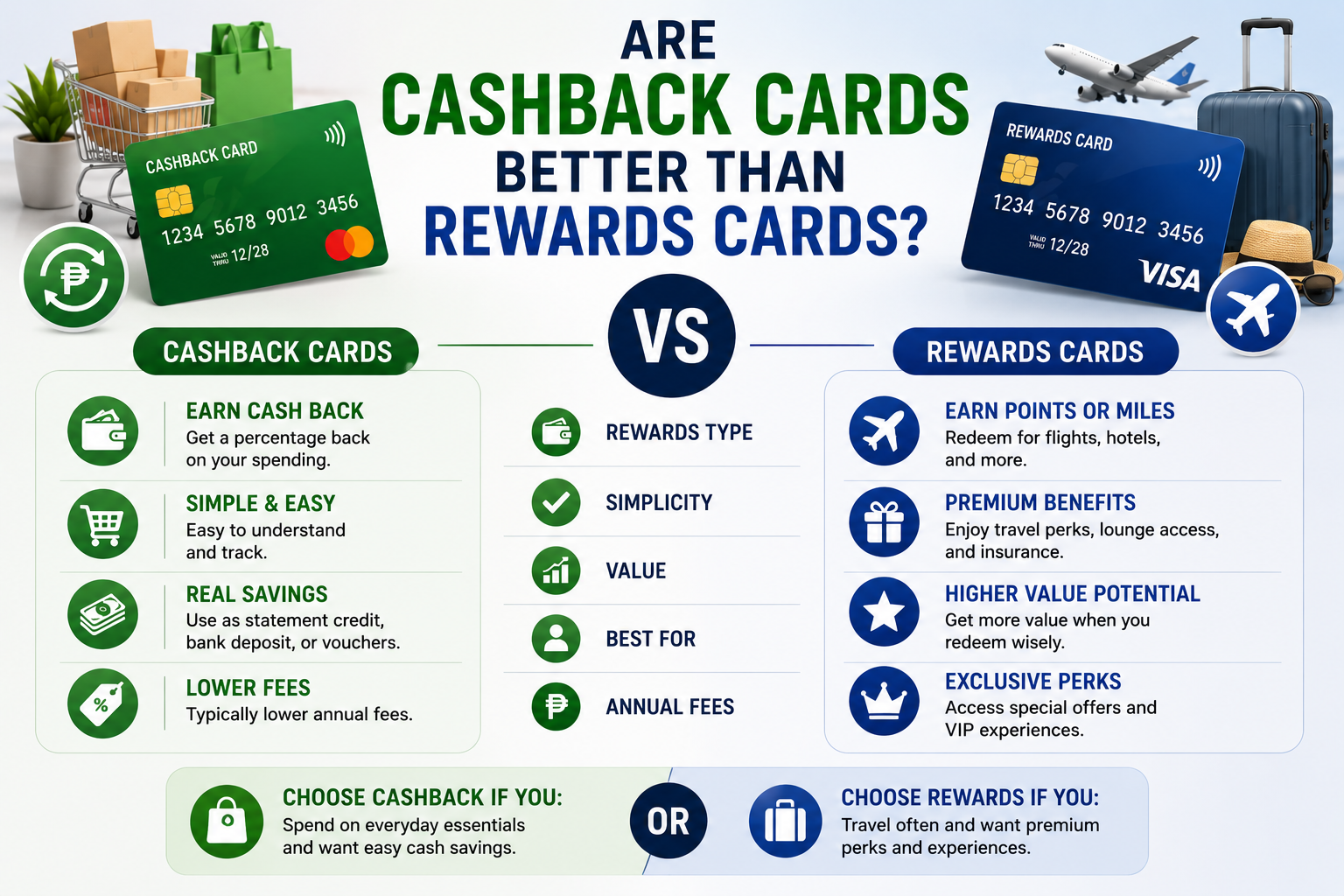
The answer depends on your spending habits, financial goals, and lifestyle. Cashback cards provide straightforward savings by returning a percentage of your purchases as cash, while rewards cards typically earn points or miles that can be redeemed for travel, merchandise, gift cards, or other benefits.
Understanding the differences between these two types of credit cards can help you select the one that delivers the greatest long-term value.
Understanding Cashback Credit Cards
Cashback credit cards reward cardholders by returning a percentage of eligible purchases as cash rewards.
For example:
- Purchase: ₱2,000
- Cashback rate: 3%
- Cashback earned: ₱60
Depending on the issuer, cashback may be redeemed as:
- Statement credits
- Bank deposits
- Shopping vouchers
- Digital wallet credits
- Gift certificates
Cashback cards are generally appreciated for their simplicity and immediate financial value.

Understanding Rewards Credit Cards
Rewards credit cards allow you to earn points for eligible purchases.
These points may later be redeemed for:
- Travel miles
- Hotel stays
- Airline tickets
- Merchandise
- Gift cards
- Dining vouchers
- Shopping credits
Premium rewards cards may also include lifestyle benefits such as:
- Airport lounge access
- Concierge services
- Travel insurance
- Purchase protection
While rewards cards often offer greater flexibility, they can also be more complex than cashback programs.
Cashback vs Rewards: Key Differences
| Feature | Cashback Cards | Rewards Cards |
|---|---|---|
| Reward Type | Cash returned on purchases | Points or miles |
| Simplicity | Very easy to understand | May require point conversions |
| Redemption | Statement credits, cash deposits | Travel, merchandise, vouchers, experiences |
| Best For | Everyday spending | Frequent travelers and premium users |
| Reward Value | Fixed and predictable | Can vary depending on redemption |
For many people, cashback cards provide more immediate value, while rewards cards offer greater flexibility for specific redemption goals.

Advantages of Cashback Credit Cards
Cashback cards have become increasingly popular because of their straightforward benefits.
Simple Rewards
You immediately know how much you’ve earned based on your spending.
There’s no need to calculate complicated point conversions.
Everyday Savings
Cashback applies to purchases many people already make, such as:
- Groceries
- Fuel
- Dining
- Online shopping
- Utilities
This makes cashback particularly useful for everyday household expenses.
Flexible Redemption
Many issuers allow cashback to be redeemed as:
- Cash deposits
- Statement credits
- Shopping vouchers
Some programs even allow automatic redemption.
Easy to Track
Cashback appears as a monetary amount, making it simple to monitor your rewards.

Advantages of Rewards Credit Cards
Rewards cards appeal to consumers looking for more than just cashback.
Travel Benefits
Many rewards cards allow points to be converted into:
- Airline tickets
- Hotel accommodations
- Vacation packages
Frequent travelers often receive greater overall value.
Premium Lifestyle Benefits
Depending on the card, additional perks may include:
- Airport lounge access
- Concierge assistance
- Travel insurance
- Extended warranties
- Purchase protection
Larger Welcome Bonuses
Premium rewards cards often feature attractive sign-up bonuses that can significantly increase the value of your first year’s spending.
Multiple Redemption Options
Unlike cashback, points can often be redeemed across several categories, giving users greater flexibility.

When Cashback Cards Are the Better Choice
Cashback cards may be the better option if you:
- Prefer simple rewards
- Primarily spend on everyday essentials
- Want immediate financial value
- Pay your balance in full each month
- Don’t travel frequently
- Prefer statement credits or cash savings
For many households, cashback cards provide predictable and consistent returns throughout the year.
When Rewards Cards Are the Better Choice
Rewards cards may be more suitable if you:
- Travel regularly
- Fly frequently
- Stay in hotels often
- Enjoy premium lifestyle benefits
- Don’t mind tracking points
- Can maximize travel redemptions
If you consistently redeem points for flights or hotel stays, rewards cards may deliver greater overall value.

Things to Compare Before Choosing
Before applying for either type of credit card, compare the following:
Annual Fees
Higher annual fees may be worthwhile if the rewards significantly outweigh the cost.
Interest Rates
If you regularly carry a balance, interest charges can easily offset any rewards earned.
Reward Categories
Some cards offer higher rewards for:
- Groceries
- Fuel
- Dining
- Online shopping
- Travel
Choose a card that aligns with your spending habits.
Redemption Flexibility
Evaluate how easy it is to redeem your rewards and whether the available options match your financial goals.
Reward Expiration
Some reward points expire after a certain period, while cashback programs may have different redemption policies.

Can You Have Both?
Absolutely.
Many consumers carry both a cashback card and a rewards card to maximize benefits.
For example:
- Use a cashback card for groceries, fuel, and dining.
- Use a rewards card for travel bookings and large purchases.
This strategy allows you to earn the best possible rewards across different spending categories while taking advantage of each card’s strengths.
Common Mistakes to Avoid
Whether you choose cashback or rewards, avoid these common mistakes:
- Spending more just to earn rewards
- Carrying high-interest balances
- Missing payment due dates
- Ignoring annual fees
- Forgetting to redeem rewards
- Choosing a card that doesn’t match your spending habits
The most valuable credit card is one that supports your financial goals without encouraging unnecessary spending.

Which Card Is Best for Different Types of Users?
| User Type | Recommended Card |
|---|---|
| Families | Cashback card |
| Grocery shoppers | Cashback card |
| Daily commuters | Cashback card |
| Frequent travelers | Rewards card |
| Business travelers | Rewards card |
| Luxury lifestyle users | Rewards card |
| Online shoppers | Cashback card |
| First-time credit card users | Cashback card |
Ultimately, the “best” card depends on how you spend and what kind of rewards you value most.
Final Thoughts
So, are cashback cards better than rewards cards? For many people, cashback cards are the more practical choice because they provide simple, predictable savings on everyday purchases like groceries, fuel, dining, and online shopping. They’re easy to understand and ideal for consumers who want immediate value without tracking points or complex redemption rules.
On the other hand, rewards cards can offer greater value for frequent travelers and those who take full advantage of premium benefits such as travel perks, airport lounge access, and flexible point redemptions.
The best choice isn’t necessarily the card with the highest advertised rewards—it’s the one that aligns with your spending habits, financial goals, and ability to pay your balance in full each month. Used responsibly, either type of credit card can become a valuable tool for saving money and enhancing your financial lifestyle.
Frequently Asked Questions
Is cashback guaranteed on every purchase?
Not always. Cashback generally applies only to eligible transactions and may be subject to merchant categories, spending caps, or promotional terms.
Can rewards points expire?
Yes. Some issuers set expiration dates for reward points, while others allow points to remain active as long as your account is in good standing.
Which type of card is better for beginners?
Cashback cards are often recommended for first-time credit card users because they are easier to understand and provide straightforward value.
Can I own both a cashback and a rewards credit card?
Yes. Many people use a combination of both to maximize savings on everyday purchases while earning travel or lifestyle rewards for larger expenses.