
 May 26, 2026
dThe credit card industry is evolving faster than ever. As technology reshapes how people shop, pay bills, and manage finances, banks and fintech companies are introducing smarter, safer, and more personalized credit card features.
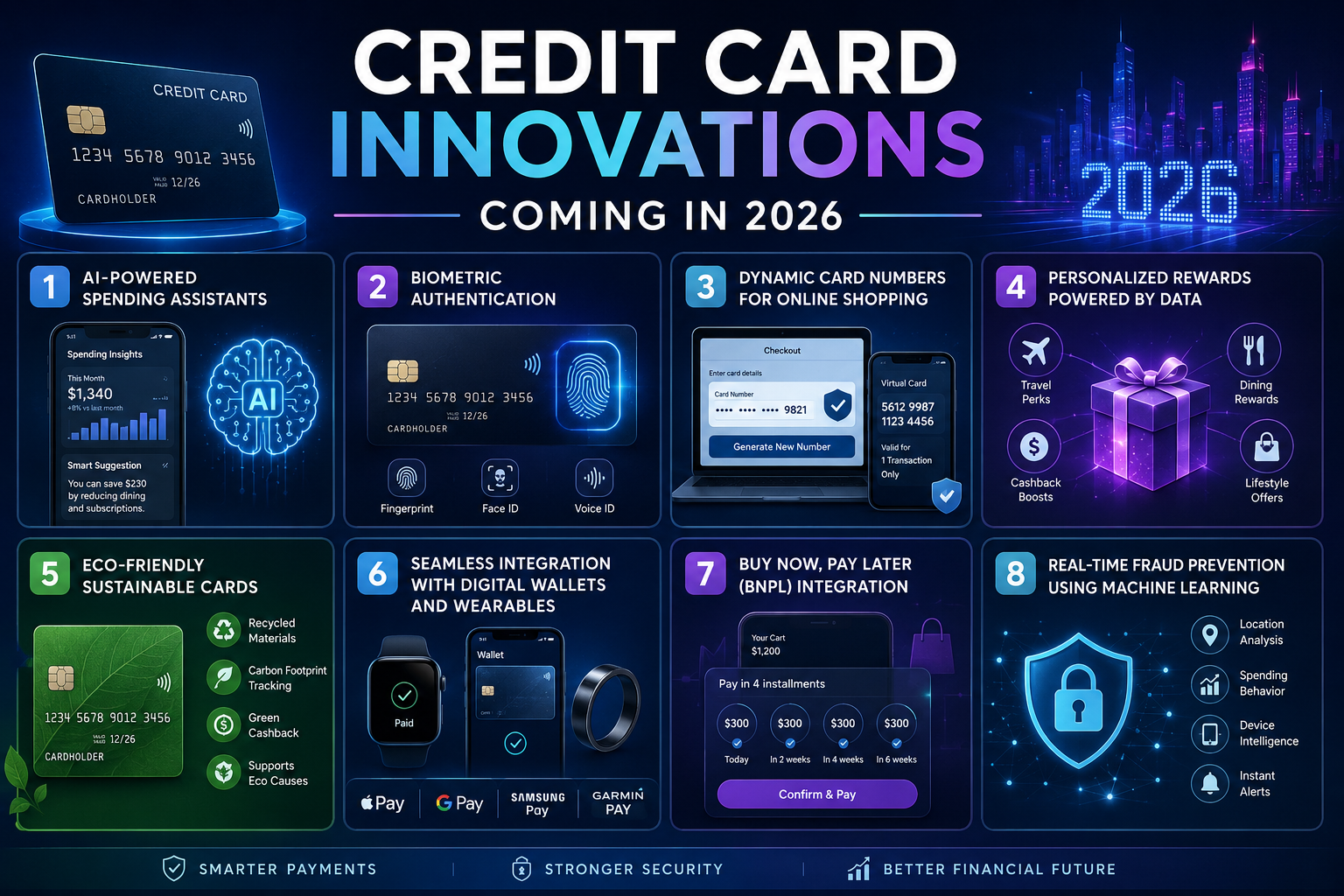
In 2026, consumers can expect credit cards to become more integrated with artificial intelligence, biometric security, digital wallets, and sustainability initiatives. These innovations are designed to improve convenience, reduce fraud, and create a better overall customer experience.
Here are the top credit card innovations expected to dominate in 2026.
1. AI-Powered Spending Assistants

Artificial intelligence is becoming a major part of personal finance. In 2026, many credit cards will include built-in AI assistants that analyze spending habits and provide real-time financial recommendations.
These smart assistants may help users:
- Detect unnecessary subscriptions
- Suggest lower-interest payment strategies
- Warn about unusual spending
- Recommend rewards optimization
- Predict future expenses
Instead of simply showing transactions, credit card apps will act more like personal financial advisors.
Why It Matters
Consumers will gain better control over their finances while maximizing cashback, rewards points, and savings opportunities.
2. Biometric Credit Card Authentication

Passwords and PINs may soon become less important thanks to biometric authentication. Credit card companies are increasingly investing in fingerprint-enabled cards and facial recognition verification.
Some next-generation cards may include:
- Built-in fingerprint sensors
- Voice authentication
- Palm recognition technology
- Advanced facial verification for online purchases
Benefits
Biometric security can significantly reduce fraud while making transactions faster and more convenient.
3. Dynamic Credit Card Numbers for Online Shopping

Online fraud remains a major concern worldwide. In response, banks are expected to expand the use of dynamic or temporary card numbers.
Instead of using a permanent credit card number, customers can generate one-time-use virtual card numbers for online purchases.
Key Advantages
- Better protection against hackers
- Safer online shopping
- Reduced risk of stolen card information
- More secure subscription management
This innovation will likely become a standard feature for premium and digital-first credit cards in 2026.
4. Personalized Rewards Powered by Data Analytics

Traditional rewards programs are becoming outdated. In 2026, expect hyper-personalized rewards based on consumer behavior and lifestyle preferences.
For example:
- Frequent travelers may automatically receive airline perks
- Food delivery users may get restaurant cashback boosts
- Gamers may unlock rewards for gaming subscriptions
- Remote workers may receive office and tech-related discounts
The Future of Rewards
Instead of generic point systems, rewards will become adaptive and personalized in real time.
5. Eco-Friendly and Sustainable Credit Cards

Sustainability is influencing the financial industry. Many banks are introducing environmentally friendly credit cards made from recycled materials or biodegradable plastics.
Some companies are also launching:
- Carbon footprint tracking
- Green cashback programs
- Rewards for eco-conscious purchases
- Donations to environmental causes
Why Consumers Like It
Modern consumers increasingly prefer brands that align with environmental values and sustainability goals.
6. Seamless Integration With Digital Wallets and Wearables

Physical cards are slowly becoming optional. In 2026, digital wallets and wearable devices will continue to dominate contactless payments.
Credit cards will integrate more smoothly with:
- Smartwatches
- Smart rings
- Mobile phones
- Augmented reality devices
- Connected vehicles
What This Means
Consumers will enjoy faster, touch-free payments almost anywhere.
7. Buy Now, Pay Later (BNPL) Integration

The popularity of Buy Now, Pay Later services is pushing traditional credit card issuers to adapt.
Future credit cards may allow users to instantly convert purchases into installment plans directly from their banking apps.
Expected Features
- Flexible repayment schedules
- Interest-free installment options
- Real-time financing approvals
- Automated budgeting support
This creates greater flexibility for consumers managing large purchases.
8. Real-Time Fraud Prevention Using Machine Learning

Fraud prevention technology is becoming smarter through machine learning and predictive analytics.
In 2026, many banks may instantly detect suspicious activity by analyzing:
- Location patterns
- Spending behavior
- Device information
- Purchase timing
- Merchant history
The Result
Fraud detection systems will become faster and more accurate, helping protect customers before unauthorized transactions happen.
Final Thoughts
The future of credit cards goes far beyond simple payments. In 2026, innovation will focus on security, personalization, convenience, and smarter financial management.
From AI-driven budgeting tools to biometric security and wearable payments, consumers can expect a more intelligent and seamless payment experience. Businesses and financial institutions that embrace these technologies early will likely gain a strong competitive advantage in the rapidly evolving fintech landscape.
As digital finance continues to advance, credit cards are transforming into complete financial ecosystems rather than just borrowing tools.