
 June 30, 2026
Credit cards can be valuable financial tools, offering convenience, rewards, and flexibility for everyday purchases. However, when balances grow beyond what you can comfortably repay, credit card debt can become a significant financial burden. High interest charges, multiple monthly payments, and the stress of mounting balances can make it feel difficult to regain control.
The good news is that recovering from credit card debt is entirely possible. It requires a realistic plan, financial discipline, and a commitment to changing spending habits. Whether you’re dealing with one credit card balance or several accounts, taking consistent steps can help you reduce debt, improve your credit health, and work toward long-term financial stability.
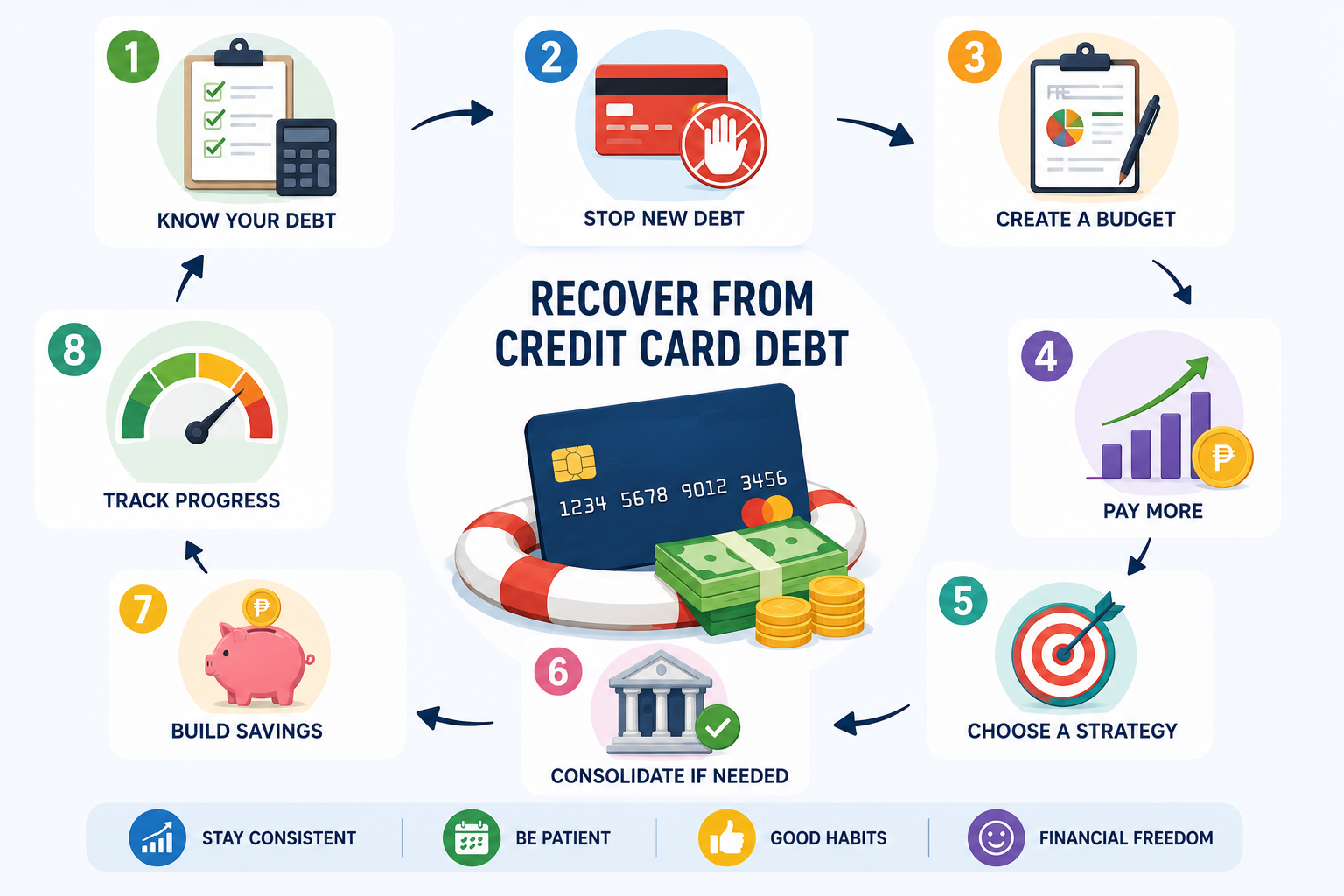
This guide explores practical strategies to help you recover from credit card debt and build healthier financial habits.
Understand Your Current Financial Situation
The first step toward recovery is understanding exactly where you stand.
Gather information about all your credit card accounts, including:
- Outstanding balances
- Interest rates
- Minimum monthly payments
- Payment due dates
- Available credit limits
Having a complete picture of your debt helps you create a repayment strategy and prioritize which balances to tackle first.

Stop Adding New Credit Card Debt
Before you can make meaningful progress, it’s important to stop increasing your balances.
Consider the following:
- Avoid impulse purchases.
- Delay non-essential spending.
- Use cash or a debit card for everyday expenses.
- Remove saved credit card information from shopping apps.
- Create a shopping list before making purchases.
Reducing new spending allows more of your monthly payments to go toward paying off existing debt instead of financing new purchases.
Create a Realistic Budget
A budget is one of the most effective tools for recovering from debt.
Start by listing:
Monthly Income
Include:
- Salary
- Freelance income
- Business income
- Other regular earnings
Fixed Expenses
Examples include:
- Rent or mortgage
- Utilities
- Insurance
- Internet
- Transportation
Variable Expenses
Include:
- Groceries
- Dining out
- Entertainment
- Shopping
- Personal expenses
Once you’ve identified your expenses, determine how much you can consistently allocate toward debt repayment.

Pay More Than the Minimum Amount
Making only the minimum payment may keep your account current, but it can significantly extend the time required to eliminate your debt.
Whenever your budget allows:
- Pay more than the minimum.
- Make additional payments during the month.
- Apply bonuses or extra income toward your balances.
Even modest increases in your monthly payment can reduce interest costs and shorten your repayment timeline.
Choose a Debt Repayment Strategy
A structured repayment method can help you stay motivated and organized.
Debt Snowball Method
Focus on paying off the smallest balance first while continuing minimum payments on your other cards.
Advantages
- Builds motivation through quick wins.
- Simplifies account management.
- Encourages consistent progress.
Debt Avalanche Method
Prioritize the credit card with the highest interest rate.
Advantages
- Reduces total interest costs.
- Pays off expensive debt first.
- Maximizes long-term savings.
Choose the strategy that best fits your personality and financial goals.

Consider Debt Consolidation
If you’re managing multiple credit card balances, consolidating your debt may simplify repayment.
Common options include:
- Personal loans
- Balance transfer credit cards
- Debt management programs
Potential benefits include:
- One monthly payment
- Lower interest rates (depending on eligibility)
- Easier budgeting
Before consolidating, compare interest rates, fees, repayment terms, and eligibility requirements to determine whether it’s the right choice for your situation.
Build an Emergency Fund
One reason people remain trapped in debt is the lack of emergency savings.
Unexpected expenses such as:
- Medical bills
- Car repairs
- Home maintenance
- Temporary job loss
often result in additional credit card spending.
Aim to gradually build an emergency fund—even a small amount can reduce reliance on credit during difficult times.

Increase Your Income
If your current income makes debt repayment difficult, consider ways to earn additional money.
Options include:
- Freelancing
- Online tutoring
- Selling unused items
- Part-time employment
- Consulting
- Small business opportunities
Directing extra income toward debt can significantly accelerate your progress.
Review Your Credit Report Regularly
Monitoring your credit report allows you to:
- Track repayment progress
- Verify account information
- Identify reporting errors
- Detect unauthorized activity
Regular reviews also help you understand how your financial habits affect your credit profile over time.

Avoid Common Debt Recovery Mistakes
As you work toward becoming debt-free, avoid these common pitfalls:
Continuing to Use Credit Cards Excessively
Accumulating new balances slows your progress.
Missing Payments
Late payments can result in fees and additional interest charges.
Closing Every Credit Card Immediately
Closing accounts without considering the impact on your credit profile may not always be the best strategy.
Ignoring Your Budget
Debt recovery requires consistent financial planning.
Giving Up Too Soon
Paying off debt takes time. Stay committed to your repayment plan.
Healthy Financial Habits That Support Debt Recovery
Long-term success depends on developing sustainable habits.
These include:
- Paying bills on time
- Keeping credit utilization low
- Reviewing monthly statements
- Avoiding impulse purchases
- Tracking expenses
- Maintaining savings
- Living within your means
Small, consistent improvements often lead to lasting financial success.
When to Seek Professional Help
If your debt feels unmanageable, consider speaking with a qualified financial counselor or your credit card issuer.
Professional assistance may help you:
- Develop a repayment plan
- Understand available debt relief options
- Improve budgeting skills
- Explore payment arrangements
Seeking help early can prevent financial challenges from becoming more severe.
Benefits of Becoming Debt-Free
Recovering from credit card debt provides numerous long-term advantages.
Lower Financial Stress
You’ll spend less time worrying about monthly payments and growing balances.
Better Cash Flow
More of your income becomes available for savings, investments, and other financial goals.
Improved Credit Health
Lower balances and consistent payments can strengthen your credit profile over time.
Greater Financial Freedom
You’ll have more flexibility to pursue opportunities such as buying a home, starting a business, or investing for retirement.
Stronger Financial Confidence
Successfully paying off debt builds healthy money management habits that benefit you for years to come.

Final Thoughts
Recovering from credit card debt doesn’t happen overnight, but every payment you make brings you one step closer to financial freedom. By understanding your debt, creating a realistic budget, choosing an effective repayment strategy, and developing healthier spending habits, you can gradually eliminate your balances and rebuild your financial health.
Remember that consistency is more important than speed. Even small improvements—such as paying more than the minimum, avoiding new debt, and building emergency savings—can make a significant difference over time. With patience, discipline, and a clear plan, you can overcome credit card debt and create a stronger financial future.