
 June 22, 2026
Credit cards can be powerful financial tools when used responsibly. They offer convenience, purchasing flexibility, rewards, cashback opportunities, and even help build a strong credit history. However, when mismanaged, credit cards can lead to mounting debt, financial stress, and damage to your credit standing.
Many cardholders make common mistakes that can negatively impact their finances without realizing the long-term consequences. By understanding these pitfalls, you can use your credit card more effectively and maintain a healthier financial future.
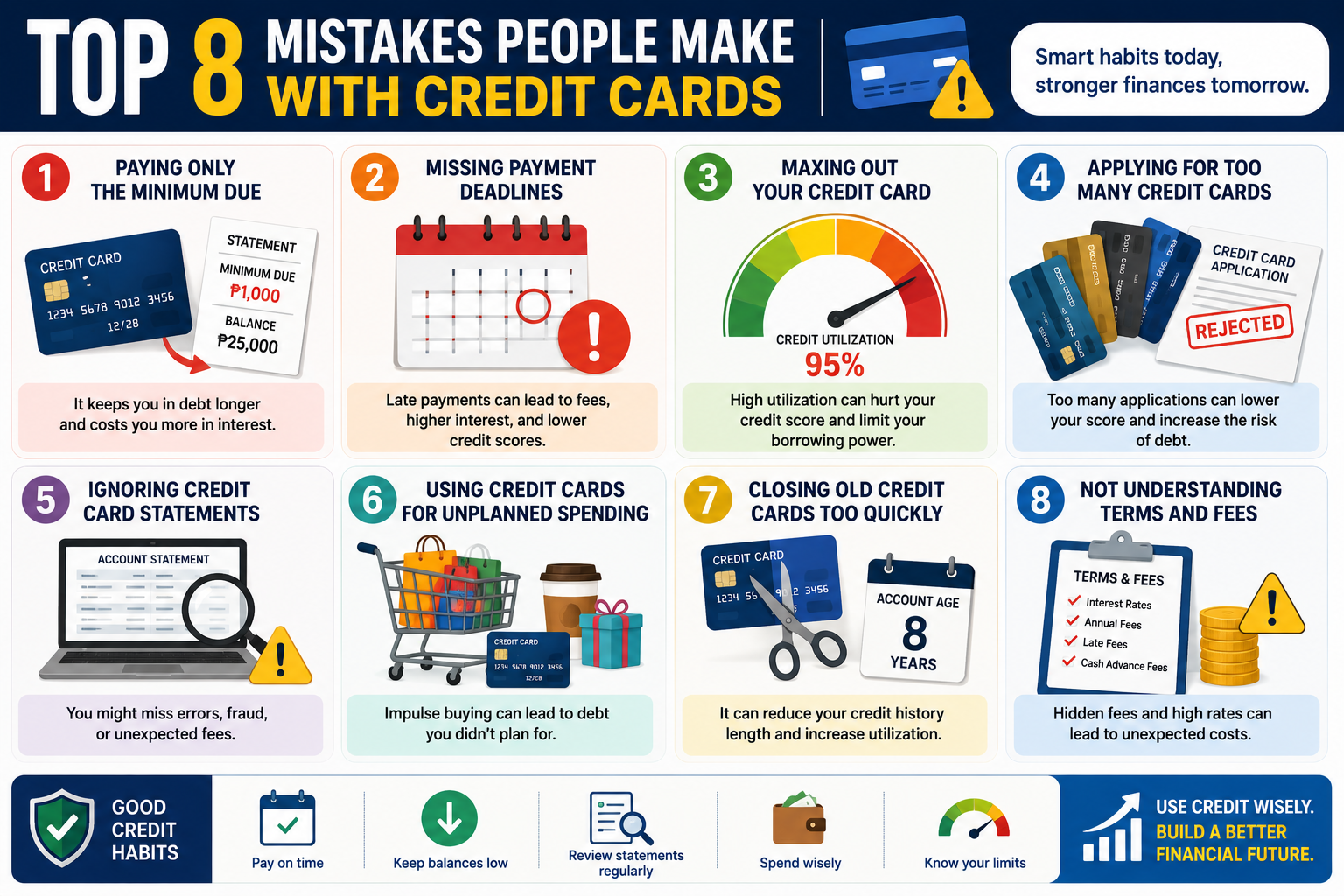
Here are eight of the most common credit card mistakes—and how to avoid them.
1. Paying Only the Minimum Amount Due
One of the biggest mistakes credit card users make is paying only the minimum amount due each month.
While this keeps your account in good standing and avoids late payment penalties, it allows interest charges to accumulate on the remaining balance.
For example, a relatively small balance can take years to pay off if you’re only making minimum payments.
Why It’s a Problem
- Higher interest costs
- Longer repayment periods
- Increased overall debt
- Reduced financial flexibility
Better Approach
Whenever possible:
- Pay your balance in full.
- Pay more than the minimum.
- Make multiple payments throughout the month.

2. Missing Payment Deadlines
Late payments can be costly and may negatively affect your credit profile.
Even one missed payment can result in:
- Late fees
- Penalty interest rates
- Negative payment history
- Lower credit standing
Consistently missing payments can make it more difficult to qualify for future credit products.
Better Approach
- Set automatic payments.
- Use payment reminders.
- Schedule payments after payday.
- Monitor due dates regularly.

3. Maxing Out Your Credit Card
Using most or all of your available credit limit can hurt your financial profile.
This is known as high credit utilization.
For example:
- Credit limit: ₱100,000
- Balance: ₱95,000
- Utilization: 95%
High utilization may signal financial stress to lenders.
Why It’s a Problem
- Can lower your credit score
- Reduces borrowing capacity
- Increases financial risk
Better Approach
Financial experts generally recommend keeping utilization below 30%.
Lower utilization often contributes to stronger credit health.

4. Applying for Too Many Credit Cards
Many consumers believe that opening multiple credit cards quickly will improve their financial flexibility.
However, excessive applications can raise concerns among lenders.
Potential Consequences
- Multiple credit inquiries
- Reduced approval odds
- Increased debt temptation
- More difficult account management
Better Approach
Only apply for credit cards that align with your financial needs and spending habits.
Focus on quality rather than quantity.
5. Ignoring Credit Card Statements
Some cardholders rarely review their monthly statements.
This can be a costly mistake because statements often reveal:
- Billing errors
- Unauthorized transactions
- Fraudulent activity
- Unexpected fees
Regular review helps ensure accuracy and protects your finances.
Better Approach
Review each statement carefully every month and immediately report suspicious activity.

6. Using Credit Cards for Unplanned Spending
Credit cards can create the illusion of having more money available than you actually do.
This often leads to impulse purchases and unnecessary debt.
Warning Signs
- Frequently carrying balances
- Buying non-essential items on credit
- Struggling to pay monthly bills
- Relying on credit for everyday expenses
Better Approach
Treat your credit card as a payment method—not as extra income.
Only spend what you can realistically repay.

7. Closing Old Credit Cards Too Quickly
Many people close unused cards believing it will improve their financial profile.
In reality, closing older accounts can sometimes have the opposite effect.
Why It Can Be Harmful
- Reduces available credit
- Increases credit utilization
- Shortens average account age
- May negatively affect credit standing
Better Approach
If the card has no annual fee and remains in good standing, keeping it open may benefit your overall credit profile.
8. Not Understanding Credit Card Terms and Fees
Many consumers apply for credit cards without fully understanding the terms and conditions.
Important details include:
- Interest rates
- Annual fees
- Late payment charges
- Foreign transaction fees
- Cash advance fees
- Rewards program rules
Failing to understand these costs can lead to unexpected expenses.
Better Approach
Always review the card’s terms before applying and regularly monitor changes to your account agreement.

Additional Credit Card Mistakes to Avoid
Beyond the major mistakes above, cardholders should also avoid:
- Sharing cards irresponsibly
- Ignoring reward expiration dates
- Using cash advances unnecessarily
- Exceeding personal budgets
- Carrying multiple high-interest balances
- Forgetting annual fee renewal dates
Small mistakes can accumulate and create larger financial problems over time.
How Responsible Credit Card Use Benefits You
When managed properly, credit cards can provide several advantages.
Benefits include:
- Building credit history
- Earning rewards and cashback
- Convenient payment options
- Enhanced purchase protection
- Emergency financial flexibility
- Easier online transactions
The key is using credit strategically rather than relying on it excessively.

Signs You’re Using Credit Cards Responsibly
You may be managing your credit cards effectively if you:
- Pay balances on time
- Maintain low utilization rates
- Review statements regularly
- Avoid unnecessary debt
- Understand your card benefits
- Stay within your budget
These habits help strengthen your credit profile and support long-term financial health.
Final Thoughts
Credit cards can be valuable financial tools, but only when used responsibly. Paying only the minimum amount due, missing payments, maxing out cards, applying for excessive credit, and ignoring statements are among the most common mistakes that can lead to debt and damage your credit standing.
By understanding these pitfalls and adopting smart financial habits, you can enjoy the benefits of credit cards while minimizing risk. Responsible credit card management not only helps you avoid costly mistakes but also supports stronger credit health, greater financial flexibility, and more opportunities in the future.