
 June 24, 2026
Credit cards can be valuable financial tools that offer convenience, security, rewards, and flexibility. However, they can also make it easier to spend beyond your means if you’re not careful. Because credit allows you to buy now and pay later, it’s possible to develop unhealthy spending habits without immediately noticing the impact on your finances.
Overspending on credit doesn’t happen overnight. It often starts with small purchases, occasional balance carryovers, or relying on credit cards during financial emergencies. Over time, these habits can lead to mounting debt, higher interest charges, and financial stress.
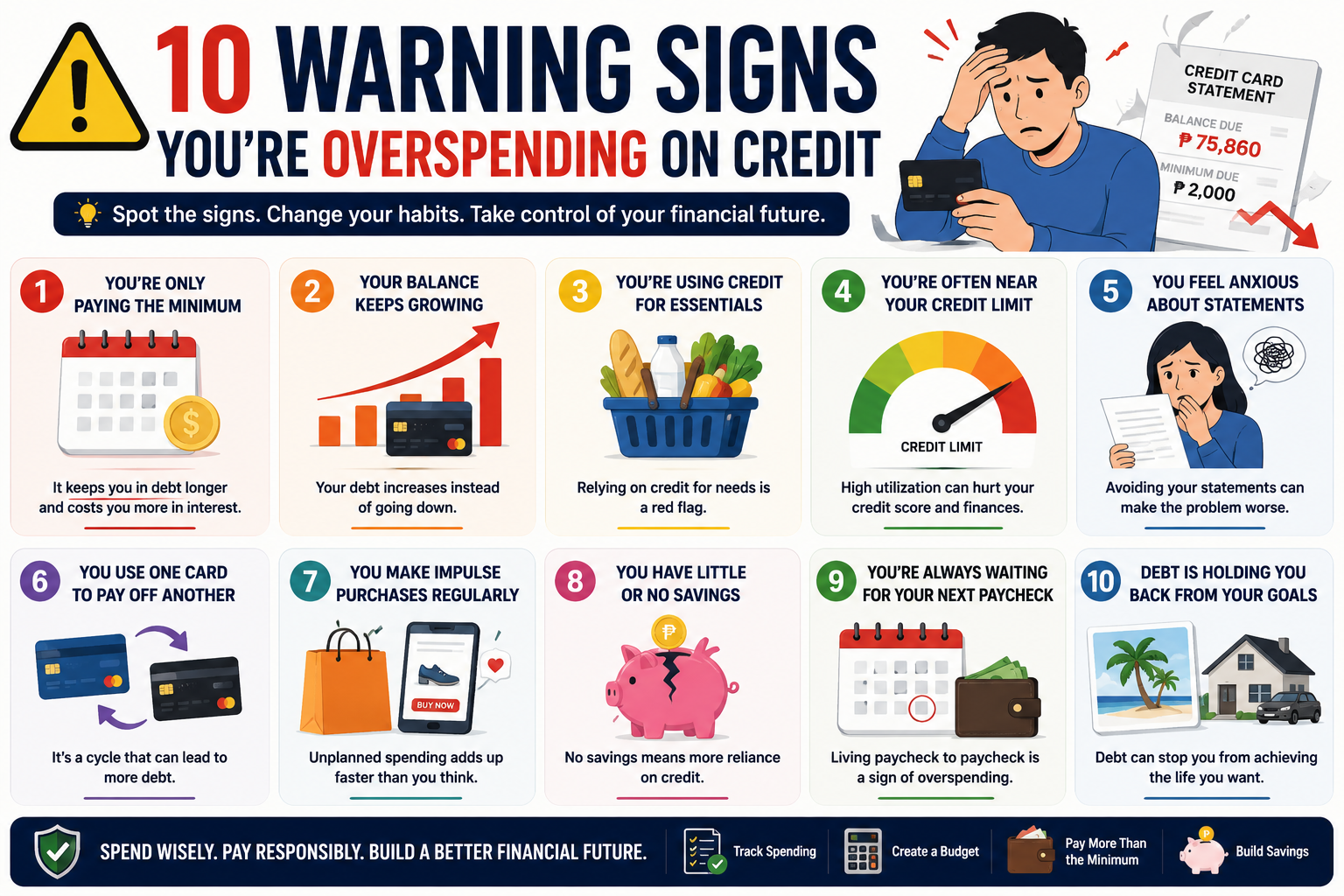
Recognizing the warning signs early can help you regain control of your finances before debt becomes overwhelming. Here are ten common signs that you may be overspending on credit.
1. You’re Only Paying the Minimum Amount Due
One of the clearest indicators of credit card overspending is consistently paying only the minimum amount required each month.
While minimum payments keep your account in good standing, they often do very little to reduce the actual balance.
Why It’s a Warning Sign
- Debt takes longer to repay
- Interest charges accumulate
- Balances remain high
- Financial flexibility decreases
If you’re regularly unable to pay more than the minimum, it may indicate that your spending has exceeded your current financial capacity.

2. Your Credit Card Balance Keeps Growing
Another warning sign is seeing your balance increase month after month.
Even if you’re making payments, continuously adding new purchases can prevent meaningful progress.
Ask Yourself
- Is your balance higher than it was six months ago?
- Are you struggling to reduce outstanding debt?
- Does it feel like you’re always carrying a balance?
Growing debt often signals that spending habits need adjustment.
3. You’re Using Credit for Everyday Essentials
Credit cards can be useful for everyday purchases when balances are paid in full.
However, regularly relying on credit for necessities such as:
- Groceries
- Utility bills
- Transportation
- Fuel
- Basic household expenses
may indicate underlying cash flow challenges.
While occasional use is normal, depending on credit because income isn’t covering essentials can be a red flag.

4. You’re Frequently Reaching Your Credit Limit
Consistently approaching or maxing out your available credit is often a sign of overspending.
High credit utilization can:
- Increase financial risk
- Lead to declined transactions
- Affect your credit profile
- Create repayment difficulties
Financial experts generally recommend keeping credit utilization below 30% of your available limit.
5. You Feel Anxious About Checking Your Statements
Many people avoid reviewing their credit card statements because they’re afraid of what they’ll find.
If you experience:
- Stress when opening statements
- Fear of seeing your balance
- Avoidance of account monitoring
it may be time to evaluate your spending habits more closely.
Ignoring the problem rarely makes it disappear.

6. You’re Using One Credit Card to Pay Off Another
Using one form of debt to manage another can be a sign that financial obligations are becoming difficult to handle.
Examples include:
- Balance transfers without a repayment plan
- Taking cash advances to make payments
- Moving balances repeatedly between cards
While balance transfers can be useful when managed strategically, relying on them simply to stay afloat may indicate deeper financial challenges.
7. You’re Making Impulse Purchases Regularly
Credit cards make spending quick and convenient.
This convenience can sometimes encourage:
- Unplanned shopping
- Emotional purchases
- Online spending sprees
- Lifestyle inflation
If many of your purchases are made without careful consideration, your credit card may be enabling unnecessary spending.
Common Impulse Spending Triggers
- Sales and promotions
- Social media influence
- Stress or boredom
- Peer pressure

8. You Have Little or No Savings
If most of your income goes toward debt payments, there may be little left for savings.
A lack of savings often forces people to rely on credit cards during emergencies.
Warning signs include:
- No emergency fund
- Difficulty saving money
- Using credit for unexpected expenses
- Living paycheck to paycheck
Healthy finances typically require a balance between spending, debt management, and saving.
9. You’re Constantly Waiting for Your Next Paycheck
Many individuals who overspend on credit find themselves counting down the days until their next payday.
Signs include:
- Running out of cash early
- Depending on upcoming income to cover bills
- Struggling to manage monthly expenses
- Repeatedly carrying balances forward
This cycle can become difficult to break without changes to spending habits.

10. Your Debt Is Preventing You From Reaching Financial Goals
Perhaps the biggest warning sign is when credit card debt begins interfering with your long-term objectives.
Examples include delaying:
- Home ownership
- Travel plans
- Business investments
- Retirement savings
- Emergency fund growth
When debt consumes a significant portion of your income, achieving major financial milestones becomes more difficult.
Why Overspending on Credit Is Dangerous
Credit card debt can create a number of financial challenges if left unchecked.
Potential consequences include:
- High interest costs
- Reduced financial flexibility
- Increased stress
- Lower savings rates
- Difficulty qualifying for future loans
- Long-term debt accumulation
The longer overspending continues, the harder it may become to regain control.


6
How to Regain Control of Your Credit Card Spending
If you’ve recognized some of these warning signs, don’t panic. There are practical steps you can take to improve your financial situation.
Create a Budget
Track income and expenses to identify where your money is going.
Reduce Non-Essential Spending
Cut back on discretionary purchases and prioritize necessities.
Pay More Than the Minimum
Increasing your monthly payments can accelerate debt reduction.
Set Spending Limits
Establish personal limits for credit card use.
Build an Emergency Fund
Savings can reduce reliance on credit during unexpected situations.
Monitor Your Accounts Regularly
Review statements and track spending habits consistently.
Signs You’re Improving
Positive progress may include:
- Lower credit card balances
- Increased savings
- Reduced utilization rates
- More manageable monthly expenses
- Greater confidence in your finances
Even small improvements can lead to significant long-term benefits.


6
Final Thoughts
Credit cards can be useful financial tools, but they can also encourage spending habits that lead to long-term debt. Paying only the minimum, carrying growing balances, relying on credit for essentials, and struggling to save are all warning signs that you may be overspending on credit.
The sooner you recognize these indicators, the easier it will be to make adjustments and regain control of your finances. By creating a budget, reducing unnecessary spending, paying down debt, and building healthy financial habits, you can use credit responsibly while protecting your long-term financial well-being.