
 June 17, 2026
Life can get busy, and occasionally missing a payment may seem like a minor oversight. However, when it comes to your credit record, even a single missed payment can have lasting consequences. Whether it’s a credit card bill, personal loan, car loan, or mortgage payment, failing to pay on time can affect your creditworthiness and potentially limit your access to future financial opportunities.
Understanding how missed payments impact your credit record can help you avoid costly mistakes and maintain a healthier financial profile.
What Is a Missed Payment?
A missed payment occurs when you fail to make at least the minimum required payment by the due date established by your lender or credit card issuer.
Common examples include:
- Credit card payments
- Personal loan installments
- Auto loan payments
- Home loan payments
- Other financial obligations reported to credit bureaus
While some lenders may offer grace periods, repeated late payments can eventually be reported and reflected in your credit history.
Why Payment History Matters
Payment history is often one of the most important factors used by lenders when evaluating credit applications.
Your payment record helps lenders determine:
- Whether you consistently meet financial obligations
- How reliable you are as a borrower
- The level of risk involved in extending credit
A strong payment history demonstrates financial responsibility, while missed payments may signal increased lending risk.

How Missed Payments Affect Your Credit Record
Negative Payment History
When a payment becomes significantly overdue and is reported, it may appear on your credit record.
Future lenders reviewing your profile may see:
- Late payment entries
- Delinquent accounts
- Patterns of missed obligations
These records can influence lending decisions and approval outcomes.
Lower Credit Scores
Missed payments can contribute to a decline in your credit score.
The impact often depends on factors such as:
- How late the payment was
- The frequency of missed payments
- Your overall credit history
- The severity of the delinquency
Individuals with previously excellent credit may notice a significant decline after a serious late payment.
Increased Risk Profile
Lenders use credit records to evaluate risk.
A history of missed payments may lead lenders to believe that:
- You struggle to manage debt
- Future payments could be unreliable
- Additional credit presents greater risk
As a result, approval odds may decrease for future applications.
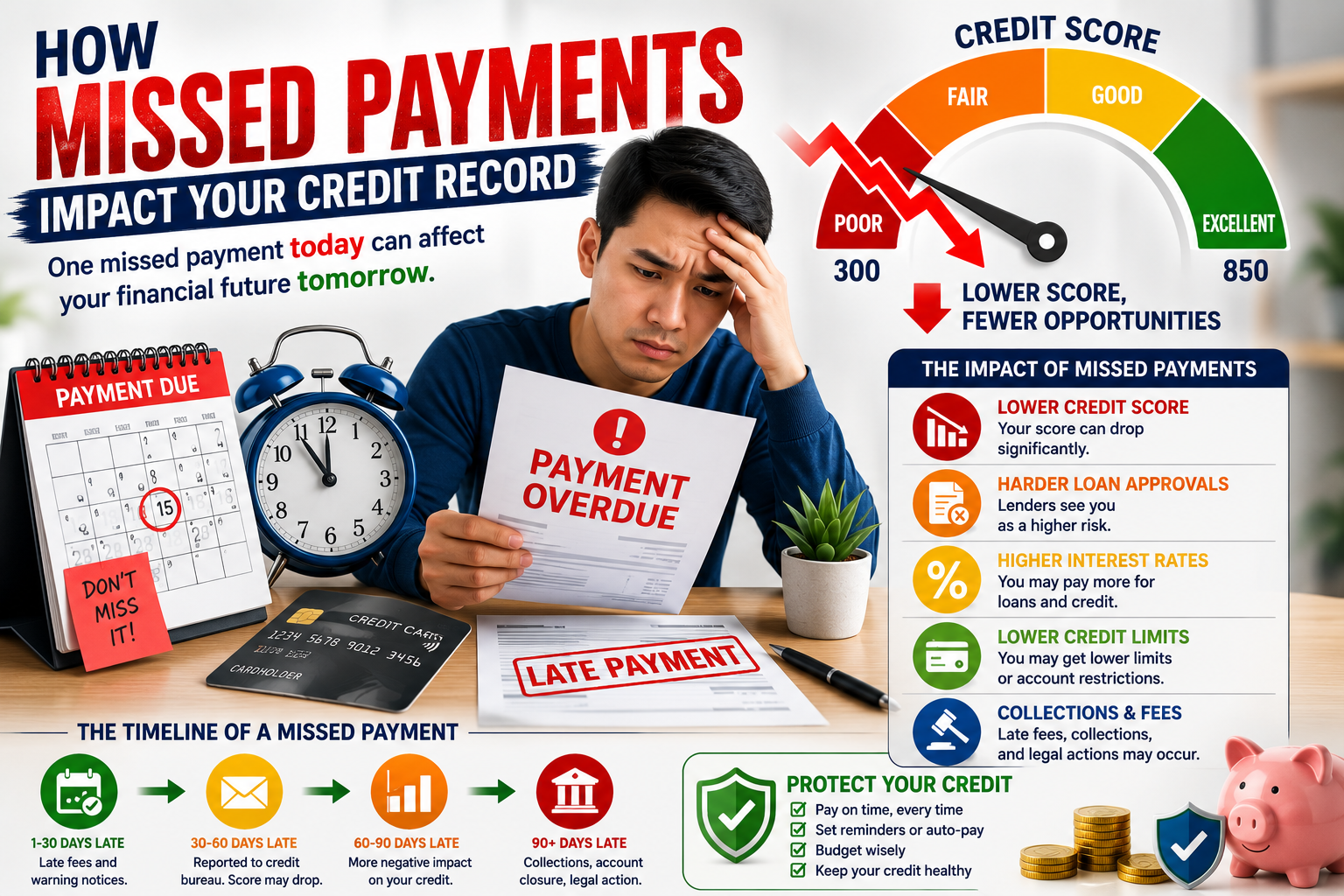
The Timeline of a Missed Payment
The consequences of a missed payment often become more serious as time passes.
A Few Days Late
You may incur:
- Late payment fees
- Penalty charges
- Warning notices from the lender
Some lenders provide a short grace period, but policies vary.
30 Days Late
At this stage, the delinquency may begin affecting your credit profile if reported.
The account may be marked as late, which can influence future credit evaluations.
60–90 Days Late
Longer delinquency periods typically indicate more serious repayment issues.
Potential consequences include:
- Additional fees
- Increased collection efforts
- Greater damage to your credit record
More Than 90 Days Late
Severely delinquent accounts may lead to:
- Collection activity
- Account closure
- Significant credit profile damage
- Legal recovery actions in some situations

How Long Do Missed Payments Stay on Your Credit Record?
The length of time negative information remains visible can vary depending on reporting policies and local regulations.
Generally, missed payments may remain part of your credit history for several years.
Even after paying off the account, the record of the late payment may still be visible to lenders for some time.
This is why preventing missed payments is often easier than repairing the damage later.
Other Consequences Beyond Your Credit Record
Missed payments can affect more than just your credit profile.
Higher Interest Rates
Future lenders may charge higher rates to compensate for perceived risk.
Reduced Approval Odds
Applicants with payment issues may face stricter lending requirements.
Lower Credit Limits
Credit card issuers may reduce available credit if they detect repayment concerns.
Loss of Promotional Benefits
Some lenders may remove special offers, rewards, or favorable terms after repeated late payments.
Additional Fees
Late payment charges can accumulate quickly and increase your overall debt burden.

Can One Missed Payment Hurt Your Credit?
Yes, even a single missed payment can affect your credit record if it becomes serious enough to be reported.
However, the extent of the impact depends on:
- Your previous credit history
- How late the payment becomes
- Whether multiple payments are missed
- The lender’s reporting practices
Individuals with otherwise strong credit profiles may recover more quickly than those with multiple existing issues.
How to Recover From Missed Payments
If you’ve already missed a payment, taking immediate action can help minimize further damage.
Pay the Account as Soon as Possible
The sooner you resolve the overdue balance, the less severe the long-term consequences may be.
Contact Your Lender
Some lenders may offer assistance programs or payment arrangements for borrowers experiencing temporary hardship.
Resume On-Time Payments
Consistent future payments can help rebuild lender confidence.
Reduce Outstanding Debt
Lower debt levels can strengthen your overall credit profile.
Monitor Your Credit Reports
Regular monitoring helps you track recovery progress and identify potential errors.

Strategies to Prevent Missed Payments
The best solution is prevention.
Consider implementing the following habits:
Set Up Automatic Payments
Automated payments reduce the risk of forgetting due dates.
Use Payment Reminders
Calendar alerts and mobile notifications can help you stay organized.
Create a Monthly Budget
A budget helps ensure funds are available when bills become due.
Maintain an Emergency Fund
Savings can provide a financial cushion during unexpected situations.
Track All Financial Obligations
Maintaining a list of recurring bills can help prevent oversights.
Signs Your Payment Habits Are Improving
Positive indicators include:
- Consistently paying on time
- Fewer outstanding balances
- Improved financial organization
- Reduced debt levels
- Better credit standing over time
These habits help strengthen your credit profile and improve future borrowing opportunities.
Final Thoughts
Missed payments can have a significant impact on your credit record, affecting your credit score, borrowing power, and access to future financial products. While one late payment may not permanently damage your financial future, repeated delinquencies can create long-lasting challenges.
The best way to protect your credit record is to pay all obligations on time, maintain organized financial habits, and address any payment difficulties immediately. By staying proactive and responsible, you can preserve a strong credit profile and enjoy greater financial flexibility for years to come.