
 June 8, 2026
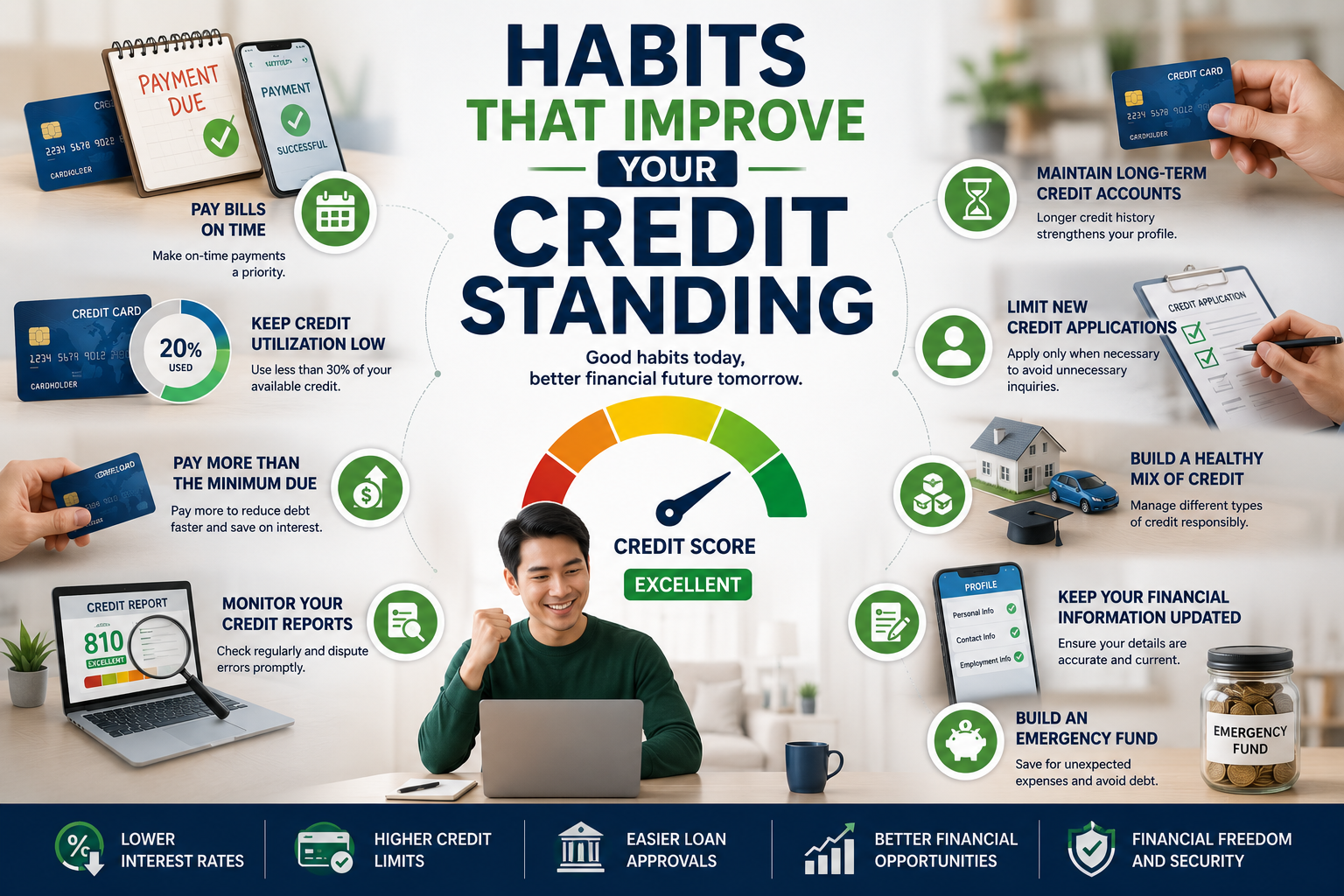
Your credit standing plays a crucial role in your financial life. Whether you’re applying for a credit card, personal loan, car loan, or mortgage, lenders use your credit profile to assess your financial reliability. A strong credit standing can help you secure better interest rates, higher credit limits, and improved approval chances.
The good news is that building good credit doesn’t happen through a single action—it develops through consistent financial habits over time. By adopting responsible credit practices, you can strengthen your credit profile and create more opportunities for your financial future.
1. Pay Your Bills on Time
Payment history is one of the most important factors affecting your credit standing. Consistently paying your credit card bills, loans, and other financial obligations on time demonstrates that you’re a responsible borrower.
Late payments can remain on your credit record for years and may negatively affect your ability to obtain future credit.
Helpful tips include:
- Set up automatic payments.
- Use payment reminders.
- Schedule bills immediately after payday.
- Maintain a monthly budget.
Even a single missed payment can impact your credit profile, making punctual payments a top priority.

2. Keep Credit Utilization Low
Credit utilization refers to the percentage of your available credit that you’re currently using.
For example:
- Credit limit: ₱100,000
- Outstanding balance: ₱20,000
- Credit utilization: 20%
Financial experts generally recommend keeping utilization below 30%, while lower percentages are even better.
Low utilization signals that you’re managing credit responsibly rather than relying heavily on borrowed funds.

3. Pay More Than the Minimum Amount Due
While making the minimum payment keeps your account current, paying only the minimum can lead to higher interest costs and slower debt reduction.
Whenever possible:
- Pay your balance in full.
- Make additional payments during the month.
- Reduce outstanding balances faster.
Lower balances can positively influence your credit standing over time.

4. Monitor Your Credit Reports Regularly
Reviewing your credit reports helps you identify potential issues before they become major problems.
Regular monitoring allows you to:
- Detect errors or inaccuracies.
- Identify unauthorized accounts.
- Track improvements in your credit profile.
- Monitor payment history records.
Early detection can help protect your credit reputation and financial security.

5. Maintain Long-Term Credit Accounts
The length of your credit history contributes to your overall credit profile.
Older accounts provide lenders with a longer record of your borrowing behavior.
For this reason:
- Avoid closing your oldest credit cards unnecessarily.
- Keep well-managed accounts active.
- Use older cards occasionally for small purchases.
A longer credit history often strengthens your credit standing.

6. Limit New Credit Applications
Every credit application may result in an inquiry on your credit report.
Applying for multiple credit cards or loans within a short period can signal financial stress to lenders.
Instead:
- Apply only when necessary.
- Research eligibility requirements beforehand.
- Focus on products that match your financial profile.
Strategic applications help maintain a healthier credit record.

7. Build a Healthy Mix of Credit
Lenders often prefer borrowers who can successfully manage different types of credit.
Examples include:
- Credit cards
- Personal loans
- Auto loans
- Mortgage loans
You don’t need every type of credit, but demonstrating responsible management across different accounts can strengthen your profile.

8. Keep Your Financial Information Updated
Many people overlook the importance of keeping their records current.
Ensure that financial institutions have your:
- Current address
- Updated contact information
- Active email address
- Correct employment details
Accurate information helps avoid communication issues that could lead to missed payments or account problems.

9. Create and Follow a Budget
A realistic budget can help you stay in control of your finances and avoid unnecessary debt.
A budget helps you:
- Track spending habits.
- Prioritize essential expenses.
- Set savings goals.
- Allocate funds for debt repayment.
Financial discipline often translates into stronger credit management.

10. Build an Emergency Fund
Unexpected expenses can quickly disrupt your finances and lead to missed payments or increased debt.
An emergency fund provides a financial cushion during situations such as:
- Medical emergencies
- Vehicle repairs
- Temporary income loss
- Home maintenance costs
Having savings available reduces the likelihood of relying heavily on credit during challenging times.

Common Habits That Hurt Your Credit Standing
While developing positive habits, it’s equally important to avoid behaviors that can damage your credit profile.
These include:
- Missing payment due dates
- Maxing out credit cards
- Frequently applying for new credit
- Ignoring account statements
- Carrying excessive debt
- Defaulting on loans
- Closing old accounts without reason
Avoiding these mistakes can help preserve the progress you’ve made toward building strong credit.
How Long Does It Take to Improve Your Credit Standing?
Improving credit standing is usually a gradual process.
Positive changes may begin appearing within a few months, but significant improvements often require:
- Consistent on-time payments
- Responsible credit usage
- Reduced debt levels
- Long-term financial discipline
The key is maintaining healthy habits consistently over time.
Benefits of a Strong Credit Standing
Good credit can provide numerous advantages, including:
- Easier approval for loans and credit cards
- Lower interest rates
- Higher credit limits
- Better financing opportunities
- Increased financial flexibility
- Greater confidence from lenders
A strong credit profile can save money and expand your financial options throughout your life.
Final Thoughts
Building and maintaining a strong credit standing isn’t about quick fixes or shortcuts. It requires consistent financial responsibility and smart money management habits. Paying bills on time, keeping credit utilization low, monitoring your credit reports, maintaining older accounts, and budgeting effectively can all contribute to a healthier credit profile.
By adopting these ten habits and practicing them regularly, you can strengthen your credit standing, improve your borrowing power, and create a more secure financial future.