
 June 19, 2026
Your credit report is one of the most important documents related to your financial health. It contains information about your borrowing history, payment behavior, credit accounts, and other details that lenders may review when evaluating loan or credit card applications.
Many people only think about their credit report when applying for a loan or experiencing a financial issue. However, regularly reviewing your credit report is a smart habit that can help you identify errors, detect fraud, monitor your financial progress, and maintain a healthy credit profile.
So, how often should you check your credit report? The answer depends on your financial situation, but in general, regular monitoring can provide significant benefits and help protect your financial future.
What Is a Credit Report?
A credit report is a record of your credit-related activities and financial obligations. It provides lenders with a snapshot of your borrowing history and overall credit behavior.
A typical credit report may include:
- Credit card accounts
- Personal loans
- Auto loans
- Housing loans
- Payment history
- Outstanding balances
- Credit inquiries
- Account statuses
Lenders use this information to assess your creditworthiness and determine the level of risk involved in extending credit.

Why Checking Your Credit Report Matters
Your credit report affects many important financial decisions.
Regular monitoring can help you:
- Verify the accuracy of your information
- Identify unauthorized activity
- Track improvements in your credit profile
- Prepare for future loan applications
- Detect signs of identity theft
- Understand factors affecting your credit standing
Even small errors can sometimes impact your ability to obtain credit, making regular reviews an important financial practice.
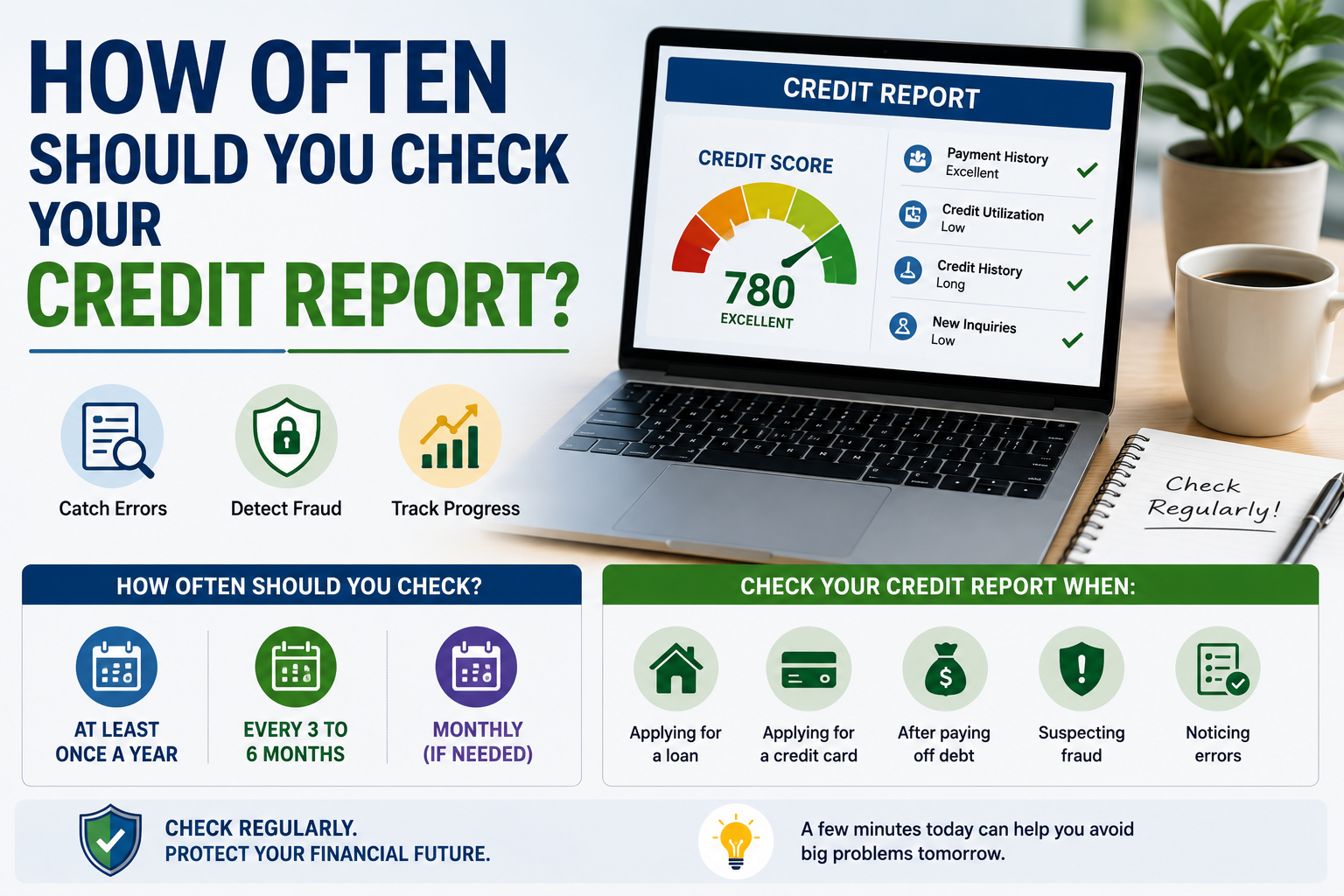
How Often Should You Check Your Credit Report?
At Least Once Per Year
For most consumers, checking your credit report at least once annually is a good starting point.
An annual review allows you to:
- Confirm account information is accurate
- Review payment history
- Identify unexpected accounts
- Check for reporting errors
Many financial experts consider annual monitoring the minimum standard for maintaining good credit health.

Every Three to Six Months
If you’re actively working to improve your credit profile, reviewing your report every three to six months can be beneficial.
More frequent monitoring helps you:
- Measure progress
- Verify that positive changes are being reported
- Track debt reduction efforts
- Monitor account activity
This approach is especially useful for individuals rebuilding credit after financial challenges.
Monthly Monitoring for Higher-Risk Situations
Some individuals may benefit from monthly reviews.
Examples include:
- Recent victims of identity theft
- Individuals with multiple credit accounts
- Frequent credit card users
- People preparing for major loan applications
- Those recovering from credit-related issues
Regular monitoring can help identify problems before they become more serious.
Situations When You Should Check Immediately
Certain situations warrant an immediate review of your credit report.
Before Applying for a Loan
Whether you’re seeking a mortgage, auto loan, or personal loan, reviewing your report beforehand can help you identify and address potential issues.
Lenders may review your credit profile during the approval process, so it’s beneficial to know what they will see.
Before Applying for a Credit Card
Checking your report can help you evaluate your approval chances and ensure there are no surprises.
After Paying Off Significant Debt
When you’ve recently paid off loans or reduced large balances, reviewing your report allows you to verify that the updates have been reported accurately.
After Discovering Suspicious Activity
If you notice unfamiliar transactions, unauthorized accounts, or unusual financial activity, review your report immediately.

What Should You Look For?
When reviewing your credit report, pay close attention to the following areas.
Personal Information
Verify that your:
- Name is correct
- Address is accurate
- Contact information is current
Errors in personal information can sometimes lead to reporting issues.
Account Information
Review all reported accounts carefully.
Check for:
- Correct balances
- Accurate payment history
- Proper account status
- Recognized lenders
Credit Inquiries
Look for inquiries you don’t recognize.
Unauthorized inquiries could indicate attempted fraud or identity theft.
Delinquent Accounts
Verify that any reported late payments or delinquent accounts are accurate.
Closed Accounts
Ensure that accounts listed as closed were actually closed by you and are reported correctly.

Common Credit Report Errors
Mistakes on credit reports are more common than many people realize.
Examples include:
- Incorrect personal information
- Accounts that don’t belong to you
- Duplicate accounts
- Incorrect balances
- Outdated account statuses
- Incorrect payment history
Identifying and addressing errors promptly can help protect your credit standing.
Does Checking Your Own Credit Report Hurt Your Credit Score?
One of the most common myths about credit monitoring is that checking your own credit report lowers your credit score.
In most cases, reviewing your own credit report does not negatively affect your credit profile.
This type of review is generally considered a personal inquiry and is separate from lender-initiated credit checks associated with new credit applications.
As a result, monitoring your own credit information regularly is usually a safe and responsible financial habit.
Benefits of Regular Credit Monitoring
Maintaining a habit of reviewing your credit report can provide several long-term benefits.
Better Financial Awareness
You’ll have a clearer understanding of your overall financial position.
Earlier Fraud Detection
Suspicious activity can often be identified before significant damage occurs.
Improved Credit Management
Regular reviews help reinforce responsible financial habits.
Stronger Loan Preparation
You’ll be better prepared when applying for future financial products.
Greater Peace of Mind
Knowing that your credit information is accurate can reduce financial stress.

Tips for Maintaining a Healthy Credit Report
In addition to reviewing your report regularly, consider the following habits:
- Pay bills on time.
- Keep credit utilization low.
- Avoid excessive debt.
- Monitor account activity frequently.
- Protect personal information.
- Report suspicious activity immediately.
- Maintain organized financial records.
These habits can help support both your credit report and overall financial well-being.
Final Thoughts
Checking your credit report regularly is one of the simplest yet most effective ways to protect your financial health. While reviewing your report at least once a year is a good baseline, more frequent monitoring may be beneficial if you’re rebuilding credit, preparing for a loan application, or protecting yourself from potential fraud.
By staying informed about your credit profile, correcting errors promptly, and maintaining responsible financial habits, you can strengthen your credit standing and improve your access to future financial opportunities. Regular credit report reviews are not just about catching problems—they’re about taking control of your financial future.