
 June 25, 2026
Credit cards can be incredibly useful financial tools, offering convenience, rewards, and purchasing flexibility. However, carrying high balances can quickly become expensive due to interest charges. If credit card debt has started to accumulate, developing a clear repayment strategy is one of the most important steps toward regaining financial control.
The good news is that there isn’t a one-size-fits-all solution. Several proven debt repayment methods can help you reduce balances, lower interest costs, and become debt-free faster. The key is choosing a strategy that aligns with your financial situation, personality, and goals.
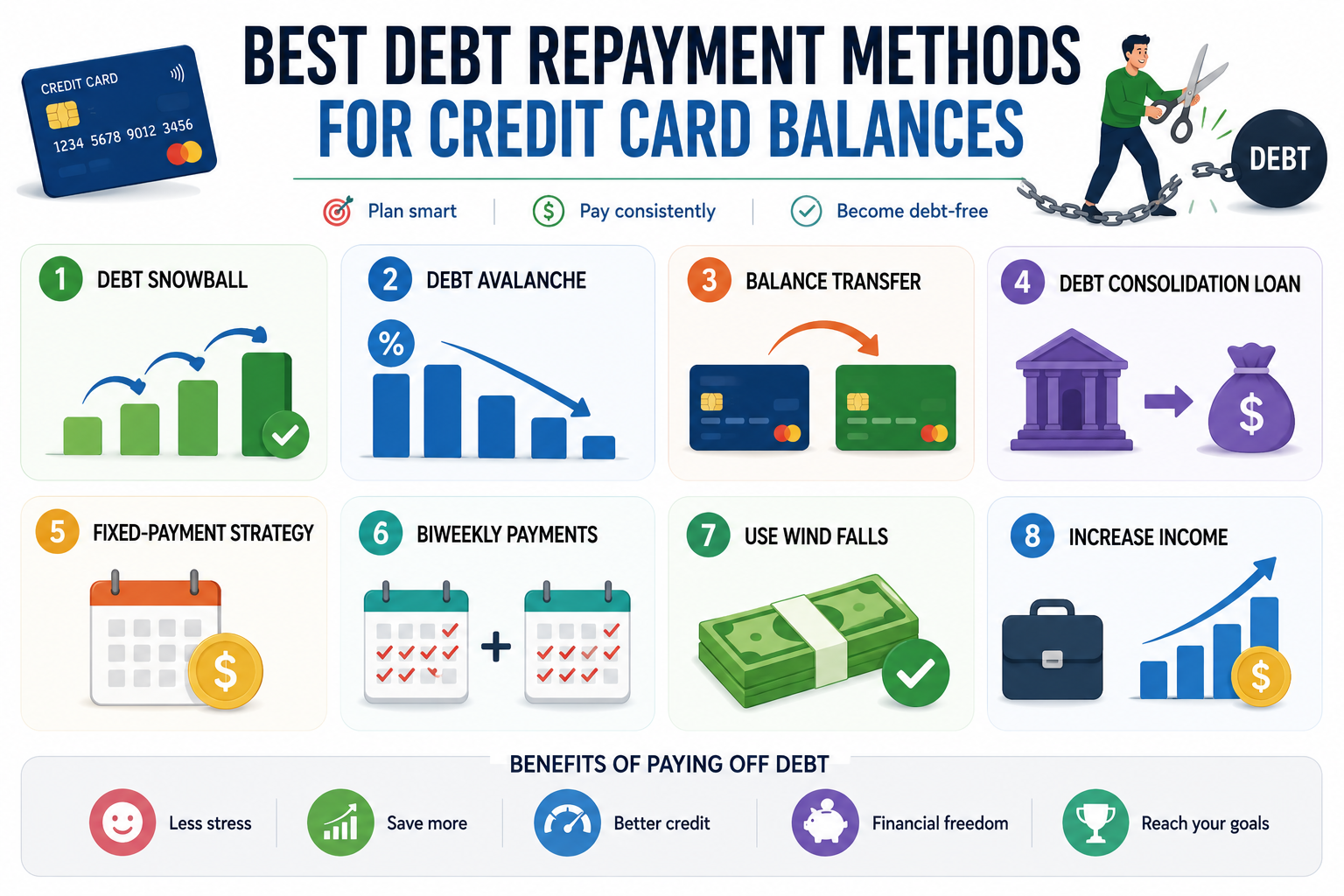
In this guide, we’ll explore some of the best debt repayment methods for credit card balances and how to determine which one may work best for you.
Why Paying Off Credit Card Debt Matters
Credit card debt can affect more than your monthly budget.
High balances may lead to:
- Significant interest expenses
- Reduced financial flexibility
- Increased financial stress
- Difficulty qualifying for future credit
- Lower available credit card limits
- Slower progress toward financial goals
Paying off debt allows you to redirect money toward savings, investments, emergency funds, and other priorities.

Step 1: Understand Your Current Debt Situation
Before choosing a repayment method, gather information about all your credit card accounts.
Create a list that includes:
- Outstanding balances
- Interest rates
- Minimum payments
- Payment due dates
This overview helps you identify which debts are costing the most and prioritize accordingly.
Example Debt Summary
| Card | Balance | Interest Rate |
|---|---|---|
| Card A | ₱20,000 | 3.0% monthly |
| Card B | ₱50,000 | 2.5% monthly |
| Card C | ₱15,000 | 3.5% monthly |
Once you understand your debt profile, you can select an effective repayment strategy.
Method 1: The Debt Snowball Method
The debt snowball method focuses on paying off the smallest balance first.
How It Works
- Continue making minimum payments on all cards.
- Direct extra funds toward the smallest balance.
- Once paid off, move that payment amount to the next-smallest balance.
- Repeat until all debts are eliminated.
Example
Balances:
- Card A: ₱10,000
- Card B: ₱30,000
- Card C: ₱50,000
You would pay off Card A first, regardless of interest rates.
Advantages
- Quick wins build motivation.
- Easier to stay committed.
- Provides visible progress.
Best For
People who need psychological momentum and encouragement throughout the repayment process.

Method 2: The Debt Avalanche Method
The debt avalanche method focuses on interest rates rather than balances.
How It Works
- Make minimum payments on all accounts.
- Direct extra payments toward the highest-interest balance.
- Once paid off, target the next-highest interest rate.
Example
Balances:
- Card A: 3.8% monthly interest
- Card B: 2.5% monthly interest
- Card C: 3.0% monthly interest
You would focus on Card A first because it costs the most.
Advantages
- Minimizes interest expenses.
- Often eliminates debt faster.
- Saves money over time.
Best For
Individuals focused on maximizing financial efficiency.

Method 3: Balance Transfer Programs
Some financial institutions offer balance transfer options that allow borrowers to move debt to a lower-interest account.
Potential Benefits
- Reduced interest costs
- Faster debt reduction
- Simplified payments
Considerations
- Balance transfer fees may apply.
- Promotional rates may expire.
- Approval requirements vary.
A balance transfer can be effective when paired with a disciplined repayment plan.
Method 4: Debt Consolidation Loans
Debt consolidation combines multiple debts into a single loan.
Instead of managing several credit card balances, you’ll make one monthly payment.
Benefits
- Simplified debt management
- Potentially lower interest rates
- Predictable repayment schedules
Drawbacks
- Qualification requirements may apply.
- Some loans include additional fees.
- Spending habits must still be addressed.
Debt consolidation works best when borrowers avoid accumulating new credit card debt.

Method 5: Fixed-Payment Strategy
Some borrowers prefer setting a specific repayment amount each month.
Example
Rather than paying whatever remains after expenses, you commit to:
- ₱5,000 monthly
- ₱10,000 monthly
- A fixed percentage of income
Benefits
- Creates consistency
- Improves budgeting
- Accelerates debt reduction
Increasing the amount whenever income rises can further shorten repayment time.
Method 6: Biweekly Payments
Most people make debt payments once per month.
With a biweekly strategy:
- Divide your monthly payment into two parts.
- Pay every two weeks.
Benefits
- Reduces average balances faster
- Lowers interest accumulation
- Improves payment consistency
Over time, this approach may help reduce debt more efficiently.
Method 7: Using Windfalls and Bonuses
Unexpected income can significantly accelerate repayment.
Examples include:
- Performance bonuses
- Tax refunds
- Freelance income
- Side hustle earnings
- Cash gifts
Rather than spending these funds immediately, applying them toward debt can dramatically shorten your repayment timeline.
Method 8: Increasing Your Income
While reducing expenses is important, increasing income can also accelerate debt repayment.
Potential options include:
- Freelancing
- Online services
- Selling unused items
- Part-time work
- Consulting
- Small business opportunities
Additional income directed entirely toward debt can create substantial progress.
Common Mistakes to Avoid
Even the best repayment strategy can fail if common mistakes occur.
Continuing to Accumulate Debt
Adding new balances slows repayment progress.
Paying Only the Minimum
Minimum payments can extend repayment for years.
Ignoring Interest Rates
High-interest debt often deserves priority attention.
Lacking a Budget
Without a budget, debt repayment may become inconsistent.
Giving Up Too Early
Debt repayment takes time. Consistency matters more than perfection.

How to Choose the Best Repayment Method
The right strategy depends on your priorities.
Choose the Debt Snowball If:
- You need motivation.
- You prefer quick wins.
- Smaller balances are causing stress.
Choose the Debt Avalanche If:
- You want to save the most money.
- Interest rates vary significantly.
- You’re focused on efficiency.
Consider Consolidation If:
- Managing multiple accounts feels overwhelming.
- Lower rates are available.
- You qualify for favorable terms.
No matter which strategy you choose, consistency is the key to success.
Benefits of Becoming Debt-Free
Paying off credit card balances can provide numerous advantages.
More Financial Freedom
Income can be redirected toward savings and investments.
Reduced Stress
Less debt often means greater peace of mind.
Improved Credit Health
Lower balances generally strengthen your credit profile.
Better Loan Opportunities
A healthier financial profile may improve future borrowing options.
Faster Wealth Building
Without debt payments, more money can go toward long-term financial goals.

Final Thoughts
There is no single best debt repayment method for everyone. Some people thrive with the motivation of the debt snowball method, while others prefer the financial efficiency of the debt avalanche approach. Balance transfers, consolidation loans, fixed-payment strategies, and income-boosting efforts can also play valuable roles in reducing credit card debt.
The most important factor is taking action. The sooner you begin paying down balances and implementing a structured repayment plan, the sooner you’ll reduce interest costs, improve your financial health, and move closer to long-term financial freedom.