
 July 21, 2026
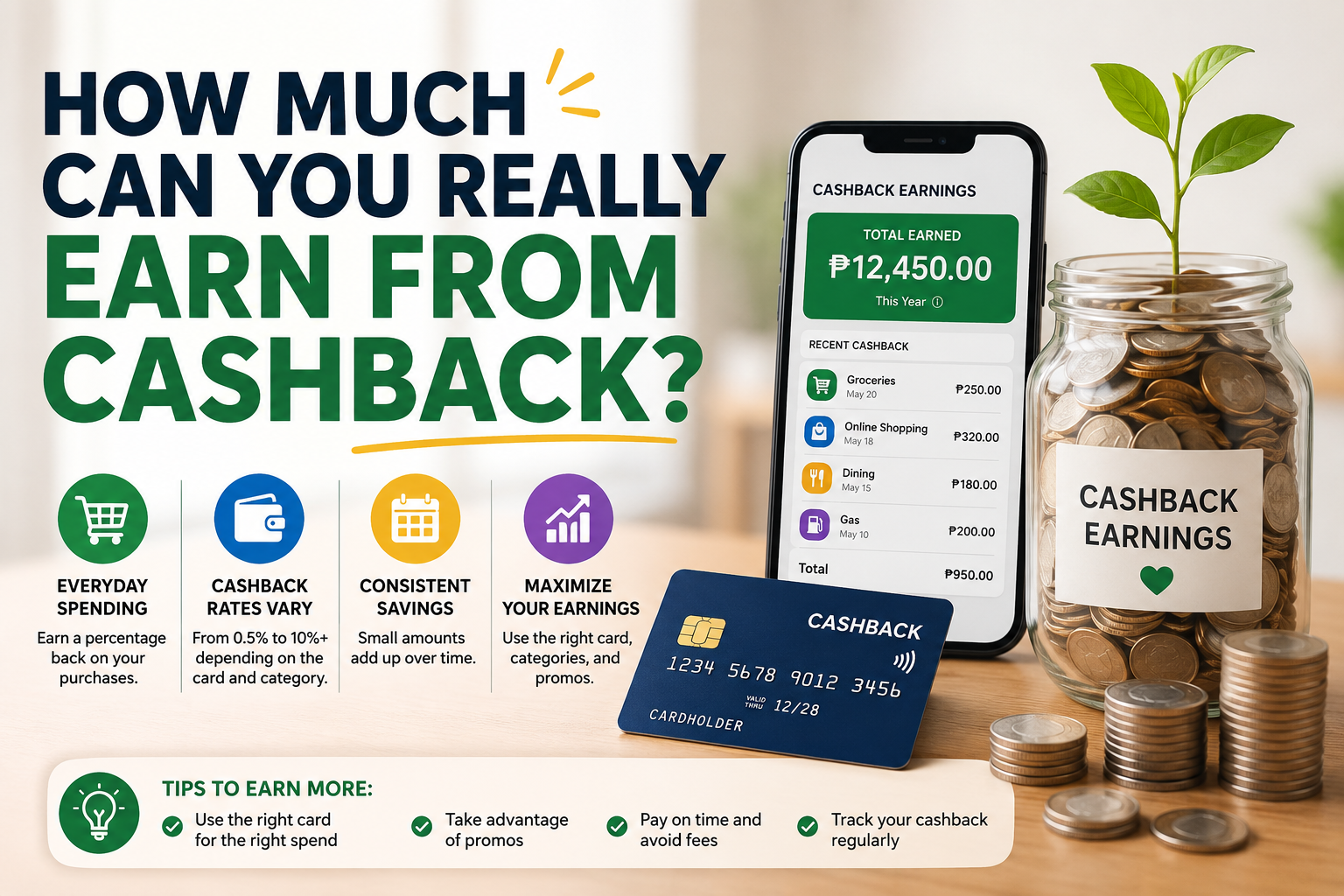
Cashback credit cards are often promoted as an easy way to save money on everyday purchases. But how much can you actually earn? Is cashback enough to make a noticeable difference in your finances, or is it just a marketing perk?
The answer depends on how you use your credit card. Your monthly spending, the card’s cashback rate, and your payment habits all influence the amount you can earn. While cashback won’t make you rich, it can generate meaningful savings over time when used responsibly.
In this guide, we’ll explore how cashback credit cards work, estimate how much you can realistically earn, and share strategies to maximize your rewards.
How Does Cashback Work?
Cashback is a reward program where a percentage of your eligible spending is returned to you by your credit card issuer.
For example:
- Monthly spending: ₱20,000
- Cashback rate: 3%
- Cashback earned: ₱600
The cashback can usually be redeemed as:
- Statement credits
- Bank deposits
- Shopping vouchers
- Gift certificates
- Digital wallet credits
Unlike rewards points, cashback has a fixed monetary value, making it simple to understand and track.

Factors That Affect Your Cashback Earnings
Several factors determine how much cashback you can earn.
1. Your Monthly Spending
The more eligible purchases you make, the more cashback you’ll receive.
For example:
| Monthly Spending | 2% Cashback | Annual Cashback |
|---|---|---|
| ₱10,000 | ₱200 | ₱2,400 |
| ₱20,000 | ₱400 | ₱4,800 |
| ₱40,000 | ₱800 | ₱9,600 |
| ₱60,000 | ₱1,200 | ₱14,400 |
Remember, these figures assume all purchases qualify for the cashback rate.
2. Cashback Percentage
Different credit cards offer different cashback rates.
Typical examples include:
- 1% on all purchases
- 2% on selected categories
- 3–5% on groceries, dining, or fuel
- Promotional cashback for partner merchants
Higher cashback rates generally lead to greater savings, especially if they align with your spending habits.
3. Spending Categories
Many cards offer bonus cashback for certain categories, such as:
- Groceries
- Fuel
- Dining
- Online shopping
- Utilities
- Pharmacies
Using the right card for the right purchase can significantly increase your rewards.

4. Cashback Limits
Some credit cards limit the amount of cashback you can earn.
Examples include:
- Monthly cashback caps
- Quarterly reward limits
- Annual maximum rewards
If you spend heavily each month, check whether your card’s reward limits could reduce your earnings.
Realistic Cashback Examples
Let’s look at a few examples of how much different types of consumers might earn.
Budget-Conscious Shopper
Monthly eligible spending:
- Groceries
- Utilities
- Fuel
Monthly spending: ₱15,000
Average cashback: 2%
Estimated cashback:
- ₱300 per month
- ₱3,600 per year
Family Household
Monthly eligible spending:
- Groceries
- Dining
- Fuel
- Online shopping
Monthly spending: ₱40,000
Average cashback:
3%
Estimated rewards:
- ₱1,200 per month
- ₱14,400 per year
Heavy Cashback User
Monthly spending:
- Household expenses
- Business purchases
- Fuel
- Travel
- Online shopping
Monthly eligible spending:
₱70,000
Average cashback:
3%
Estimated rewards:
- ₱2,100 per month
- ₱25,200 per year
These examples demonstrate how cashback can become a valuable financial benefit when your spending aligns with your card’s bonus categories.

How to Earn More Cashback
Maximizing cashback doesn’t mean spending more—it means spending smarter.
Choose the Right Cashback Card
Select a card that rewards the categories where you spend the most.
Examples include:
- Groceries
- Fuel
- Dining
- Online shopping
Use Your Card for Everyday Purchases
Instead of using cash or debit for eligible expenses, consider using your cashback credit card—provided you can pay the balance in full each month.
Watch for Promotions
Banks frequently offer:
- Bonus cashback events
- Partner merchant discounts
- Seasonal promotions
- Limited-time reward multipliers
Taking advantage of these promotions can increase your earnings.
Combine Cashback With Store Discounts
Many retailers offer coupons, loyalty rewards, or sale events.
Using these together with cashback allows you to maximize your savings on the same purchase.

Common Mistakes That Reduce Cashback
Even experienced cardholders can lose value by making these mistakes.
Carrying a Balance
Interest charges can quickly outweigh the cashback you earn.
For example:
- Cashback earned: ₱500
- Interest charged: ₱1,800
In this case, you’ve spent far more than you received in rewards.
Spending More to Earn Cashback
Avoid buying unnecessary items simply to earn additional rewards.
A 5% cashback rate still means you’re paying 95% of the purchase price.
Ignoring Cashback Caps
Know your card’s monthly or annual reward limits.
Missing Payment Due Dates
Late payments may result in:
- Interest charges
- Late fees
- Reduced financial flexibility
Is Cashback Taxable?
In many cases, cashback earned from credit card spending is treated as a rebate or discount rather than taxable income. However, tax treatment can vary depending on local regulations and the nature of the rewards. If you’re earning cashback through business expenses or have questions about your specific situation, it’s a good idea to consult a qualified tax professional.
Is Cashback Worth It?
For many consumers, the answer is yes.
Cashback is especially valuable if you:
- Pay your balance in full every month
- Spend consistently on everyday essentials
- Choose a card that matches your lifestyle
- Avoid unnecessary debt
- Take advantage of bonus categories
While cashback won’t replace a paycheck, it can reduce your annual expenses and provide tangible savings with little extra effort.

Final Thoughts
So, how much can you really earn from cashback? The answer depends on your spending habits, the cashback rates offered by your credit card, and how responsibly you manage your account. For many people, annual cashback earnings can range from a few thousand pesos to well over ₱20,000, especially when using the right card for everyday purchases.
The key is to treat cashback as a bonus—not a reason to spend more. By paying your balance in full, focusing on high-reward categories, and taking advantage of promotions, you can turn routine expenses into meaningful savings throughout the year.
Frequently Asked Questions
How much cashback can I realistically earn in a year?
Depending on your spending and your card’s rewards program, annual cashback can range from ₱2,000 to over ₱20,000 or more.
Is cashback better than rewards points?
Cashback offers straightforward savings, while rewards points may provide greater value for frequent travelers. The better option depends on your financial goals and spending habits.
Do all purchases earn cashback?
Not always. Cashback usually applies only to eligible transactions and may exclude categories such as cash advances, balance transfers, fees, or interest charges.
Can I lose my cashback?
Some issuers may have expiration rules or require your account to remain in good standing. Review your card’s terms and conditions for specific details.