
 June 23, 2026
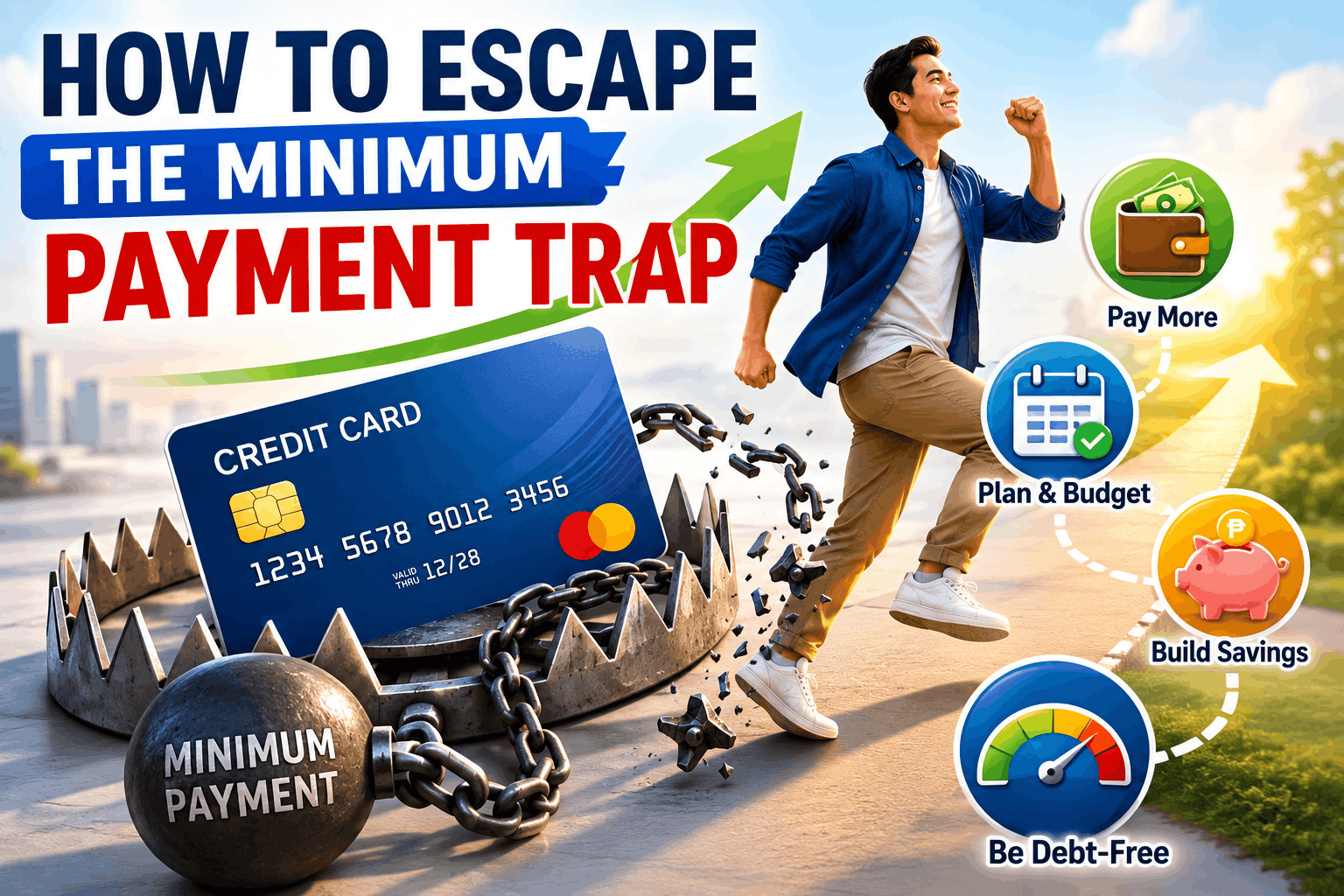
Credit cards offer convenience, flexibility, and valuable rewards, but they can also become a source of long-term debt when not managed carefully. One of the most common financial pitfalls that credit card users face is the minimum payment trap.
At first glance, making only the minimum payment may seem like a manageable solution when money is tight. After all, it keeps your account in good credit standing and helps you avoid late payment penalties. However, consistently paying only the minimum can significantly increase the amount of interest you pay and keep you in debt for years.
Understanding how the minimum payment trap works—and how to escape it—can save you thousands of pesos and help you regain control of your finances.
What Is the Minimum Payment Trap?
The minimum payment is the smallest amount your credit card issuer requires you to pay each billing cycle to keep your account current.
Typically, this amount represents only a small percentage of your outstanding balance.
For example:
- Outstanding balance: ₱50,000
- Minimum payment: ₱1,500
While paying ₱1,500 satisfies the requirement, the remaining balance continues to accrue interest.
Over time, this can create a cycle where most of your payment goes toward interest charges rather than reducing the actual debt.

Why Paying Only the Minimum Is Costly
Many people underestimate the true cost of making minimum payments.
Interest Continues to Accumulate
When you carry a balance, interest is charged on the unpaid amount.
The longer the balance remains, the more interest accumulates.
Debt Repayment Takes Much Longer
A balance that could be paid off in a year may take several years when only minimum payments are made.
Total Cost Increases
You may end up paying significantly more than the original purchase price because of accumulated interest charges.
Financial Flexibility Decreases
Carrying debt limits your ability to save, invest, or handle unexpected expenses.
How the Minimum Payment Trap Happens
The trap often develops gradually.
Common causes include:
- Overspending on credit cards
- Relying on credit during emergencies
- Unexpected medical expenses
- Job loss or reduced income
- Poor budgeting habits
- Carrying multiple credit card balances
Initially, minimum payments may seem manageable, but over time, debt can grow faster than expected.

Warning Signs You’re Stuck in the Minimum Payment Trap
Recognizing the warning signs early can help you take corrective action.
Your Balance Hardly Changes
If you’ve been making payments for months but your balance remains nearly the same, interest may be consuming much of your payment.
You Regularly Carry a Balance
Consistently carrying debt from month to month often indicates reliance on credit.
You’re Using Credit While Paying Existing Debt
Making new purchases while struggling to reduce existing balances can prolong the cycle.
Most of Your Payment Goes to Interest
Review your statements carefully to understand how much is being applied to principal versus interest.
Debt Feels Permanent
If it seems like your balance never decreases despite regular payments, you may be caught in the trap.
Step 1: Stop Adding New Debt
The first step toward escaping the minimum payment trap is preventing the balance from growing further.
Consider:
- Pausing non-essential spending
- Avoiding impulse purchases
- Limiting credit card usage temporarily
- Using cash or debit cards for everyday expenses
Reducing new charges allows more of your payments to go toward eliminating existing debt.

Step 2: Pay More Than the Minimum
The most effective way to escape the trap is to increase your monthly payments.
Even modest increases can make a significant difference.
For example:
- Minimum payment: ₱2,000
- Actual payment: ₱4,000
Doubling your payment can dramatically reduce both repayment time and interest costs.
Whenever possible:
- Pay extra after receiving bonuses.
- Apply tax refunds toward debt.
- Use side-income earnings for repayments.
- Make additional payments throughout the month.
Step 3: Create a Debt Repayment Strategy
Having a structured repayment plan improves your chances of success.
Debt Snowball Method
Focus on paying off the smallest balance first while making minimum payments on other cards.
Benefits include:
- Faster psychological wins
- Increased motivation
- Simplified account management
Debt Avalanche Method
Focus on the highest-interest debt first.
Benefits include:
- Lower overall interest costs
- Faster financial savings
- More efficient debt elimination
Choose the approach that best fits your personality and financial goals.

Step 4: Build a Realistic Budget
A budget helps ensure that debt repayment becomes a priority rather than an afterthought.
Your budget should include:
- Income sources
- Essential living expenses
- Debt payments
- Savings goals
- Discretionary spending
Tracking expenses often reveals opportunities to redirect money toward debt reduction.
Step 5: Consider Balance Consolidation
In some situations, consolidating debt may simplify repayment.
Potential options include:
- Balance transfer programs
- Personal loans
- Debt consolidation loans
These solutions may offer lower interest rates, helping more of your payment go toward reducing principal.
However, always review fees, terms, and repayment requirements before proceeding.
Step 6: Build an Emergency Fund
One reason people remain trapped in debt is that unexpected expenses force them to use credit cards repeatedly.
Even a modest emergency fund can help cover:
- Medical expenses
- Car repairs
- Home maintenance
- Temporary income disruptions
Having savings reduces dependence on credit during financial emergencies.

Step 7: Monitor Your Progress
Tracking your progress keeps you motivated and focused.
Monitor:
- Remaining balances
- Monthly payments
- Interest charges
- Debt reduction milestones
Celebrating small victories can help maintain momentum throughout the repayment process.
Common Mistakes to Avoid
While working to escape the minimum payment trap, avoid these common errors:
Closing Cards Too Soon
Paying off a card doesn’t necessarily mean you should immediately close it.
Ignoring Interest Rates
Understanding which debts cost the most can improve repayment efficiency.
Taking on New Debt
New balances can quickly erase progress.
Lacking a Repayment Plan
Without a strategy, debt repayment often becomes inconsistent.
Benefits of Escaping the Minimum Payment Trap
Becoming debt-free offers significant advantages.
More Financial Freedom
You’ll have more money available for savings and investments.
Lower Interest Costs
Paying off debt reduces future interest expenses.
Improved Credit Health
Lower balances can strengthen your credit profile.
Reduced Financial Stress
Eliminating debt often leads to greater peace of mind.
Faster Achievement of Financial Goals
Whether you’re saving for a home, business, or retirement, less debt creates more opportunities.

Final Thoughts
The minimum payment trap can quietly keep you in debt for years while costing far more in interest than you may realize. Although minimum payments help you avoid late fees, relying on them as a long-term strategy can delay financial progress and create unnecessary stress.
The good news is that escaping the trap is entirely possible. By stopping new debt, paying more than the minimum, creating a repayment plan, building a budget, and maintaining consistent financial discipline, you can take control of your credit card balances and work toward a debt-free future.
Every extra peso you put toward reducing your balance brings you one step closer to greater financial freedom and long-term financial security.