
 February 20, 2026
In the Philippines, credit cards still come with a mix of excitement and fear. Some people see them as symbols of financial freedom. Others see them as fast tracks to debt.
The truth? Credit cards are neither heroes nor villains. They’re tools. And like any tool, they can either help or hurt—depending on how you use them.
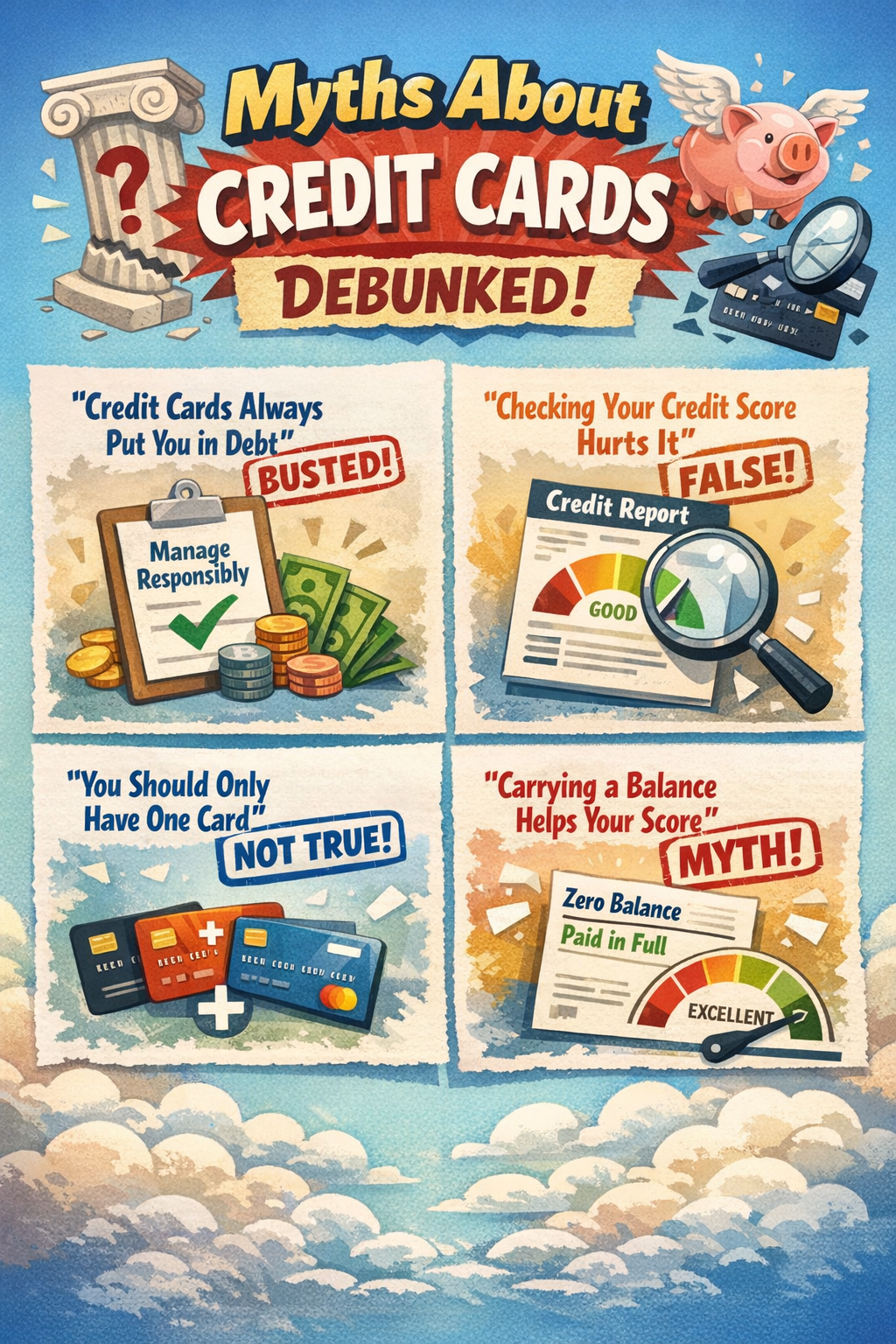
Let’s take a deeper look at five of the most common credit card myths in the Philippines and unpack what’s really going on behind the scenes.
Myth #1: “Having a Credit Card Automatically Means You’ll Be in Debt”

This myth usually comes from horror stories: someone maxed out their card, couldn’t keep up with payments, and ended up drowning in interest charges.
But here’s the thing—a credit card doesn’t force you into debt. Overspending does.
When you use a credit card, you’re essentially borrowing money from the bank with the promise to pay it back by a specific due date. If you pay your full balance on or before that due date, you won’t be charged interest at all.
That means:
- No added fees
- No compounding interest
- No long-term debt
Banks such as BDO Unibank, Bank of the Philippine Islands, and Metrobank even offer 0% installment promos for gadgets, appliances, tuition, and travel. When used wisely, those offers can actually help you manage big purchases without straining your monthly cash flow.
The real danger happens when:
- You treat your credit limit as extra income
- You consistently spend beyond your means
- You ignore due dates
A healthy mindset is to treat your credit card like a debit card—only charge what you already have the money to pay for.
Bottom line: Credit cards don’t cause debt. Financial habits do.
Myth #2: “It’s Safer to Use Cash Than a Credit Card”
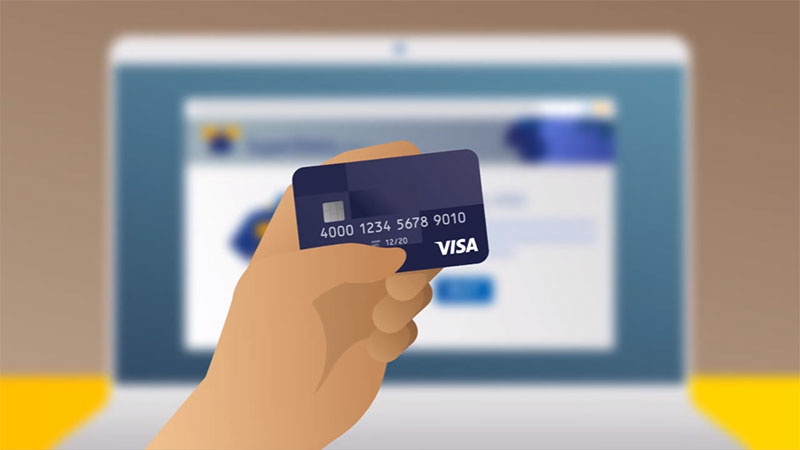
Many Filipinos still feel more secure carrying cash. It feels tangible. It feels controlled.
But ironically, cash can be riskier.
If your wallet gets stolen with ₱10,000 inside, that money is gone for good. There’s no recovery process. No investigation. No reversal.
With a credit card, it’s different.
If your card is lost or stolen:
- You can call your bank immediately.
- The card can be blocked within minutes.
- Fraudulent charges can be disputed.
Most banks now send instant SMS or app notifications for transactions. Some even require one-time passwords (OTP) for online purchases. These security layers make unauthorized use much harder.
Plus, when shopping online—whether it’s flights, hotel bookings, or Lazada purchases—credit cards often offer better buyer protection compared to cash-on-delivery or bank transfers.
Of course, you still need to practice smart habits:
- Don’t share your OTP.
- Avoid suspicious links.
- Monitor your statements monthly.
Bottom line: Credit cards, when used carefully, can offer stronger protection than cash.
Myth #3: “Credit Cards Are Only for the Wealthy”

Years ago, having a credit card felt like a status symbol. It was something associated with executives, business owners, or frequent travelers.
Today? That’s no longer true.
Many banks now offer entry-level cards designed for:
- First-time applicants
- Young professionals
- Freelancers
- Small business owners
There are even secured credit cards, where you deposit a certain amount (for example, ₱15,000) and receive a credit limit based on that deposit. This is a great option for people who want to build their credit history from scratch.
As long as you have:
- A stable source of income
- Valid identification
- Proper documentation
…you have a realistic chance of getting approved.
Credit cards are becoming more accessible because banks understand that financial inclusion matters. They’re not just targeting high earners anymore—they’re reaching everyday working Filipinos.
Bottom line: Credit cards aren’t exclusive clubs anymore. They’re financial tools available to many income levels.
Myth #4: “Paying the Minimum Amount Is Enough”
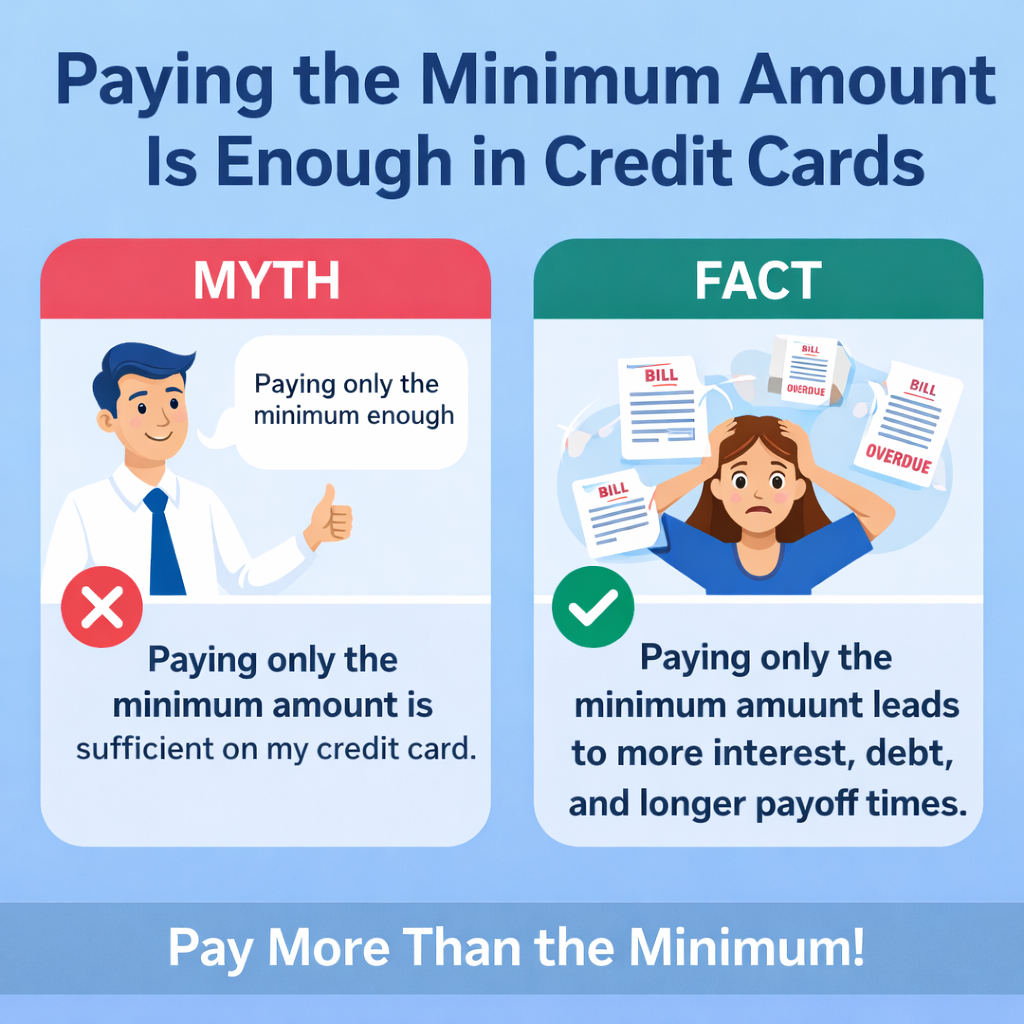
This myth is technically true—but dangerously misleading.
Yes, you are allowed to pay only the minimum amount due. But doing so triggers interest charges on the remaining balance.
Let’s say you spend ₱30,000 and your minimum due is ₱1,500. If you only pay that ₱1,500:
- The remaining ₱28,500 will start accumulating interest.
- Next month, you’ll pay interest on top of that balance.
- The cycle continues.
Over time, you could end up paying far more than your original purchase price.
In the Philippines, monthly interest rates can reach up to 3% (depending on regulations and bank policies). That might not sound huge at first, but compounded over months, it adds up quickly.
Paying only the minimum:
- Extends your debt period
- Increases total repayment cost
- Keeps you financially stressed
If you can’t pay in full, try to pay as much as possible beyond the minimum. Even small additional amounts can significantly reduce your interest burden.
Bottom line: The minimum due keeps your account in good standing—but it doesn’t keep you financially free.
Myth #5: “Applying for a Credit Card Will Ruin Your Credit Score”
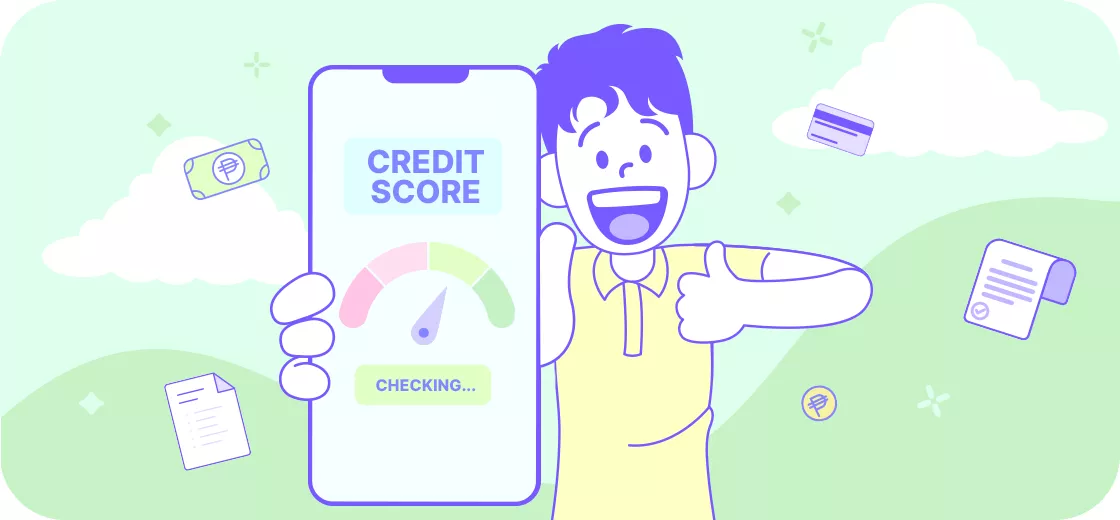
Some people avoid applying for a credit card because they’re scared of hurting their credit score.
In reality, one application causes only a small, temporary dip. What truly damages your credit score are:
- Late payments
- Defaulted accounts
- Maxed-out credit limits
- Unpaid loans
On the other hand, using a credit card responsibly can actually improve your credit profile over time.
Here’s how:
- Paying on time builds reliability.
- Keeping your balance low shows financial control.
- Maintaining a long account history strengthens your record.
Think of your credit score like a reputation. It’s not about whether you borrow money—it’s about how you handle it.
If you plan to apply for bigger financial commitments in the future—like a car loan, home loan, or business loan—having a positive credit history can work in your favor.
Bottom line: Responsible credit card use builds your credit score. Mismanagement damages it.
Final Thoughts: Credit Cards Are About Discipline, Not Fear
In the Philippines, many credit card myths are passed down through stories—sometimes exaggerated, sometimes outdated.
The reality is simple:
- A credit card is not free money.
- It’s not a guaranteed debt trap either.
- It’s a financial tool that requires discipline.
When you understand how billing cycles, interest rates, and due dates work, you gain control. And when you stay within your means, you unlock benefits like rewards, installment flexibility, and stronger financial credibility.
If you’re thinking about getting a credit card, don’t let myths decide for you. Let information—and responsible habits—guide you instead.